American Revolution Worksheets
-
American Revolution Quiz
-
Causes of the Revolution
-
Colonial Life During the War
-
-
Comparing Loyalist and Patriot Perspectives
-
Comparing Revolutionary Voices
-
Declaration of Independence Reading
-
Equality in the Revolution
-
Key Battles Report
-
Revolutionary Quotes Journal
-
Revolutionary Vocabulary Challenge
-
Timeline of the Revolution
-
Who’s Who in the Revolution
About This Worksheet Collection
The American Revolution worksheet collection immerses students in one of the most pivotal eras of U.S. history through an engaging mix of reading comprehension, primary source analysis, and creative reflection. Each worksheet is crafted to bring the struggle for independence to life-inviting learners to explore its causes, key figures, and defining moments while sharpening their historical thinking skills. Teachers can use these printables as stand-alone lessons or as part of a broader unit on colonial America and the birth of democracy.
Across this collection, students develop a wide range of academic abilities, from close reading and text comparison to chronological reasoning and persuasive writing. They'll analyze documents, interpret perspectives, and connect revolutionary ideals to enduring questions about freedom and equality. Together, these resources build literacy, civic understanding, and analytical confidence, helping students see history not just as a series of events but as a living conversation about justice and change.
Detailed Descriptions Of These Worksheets
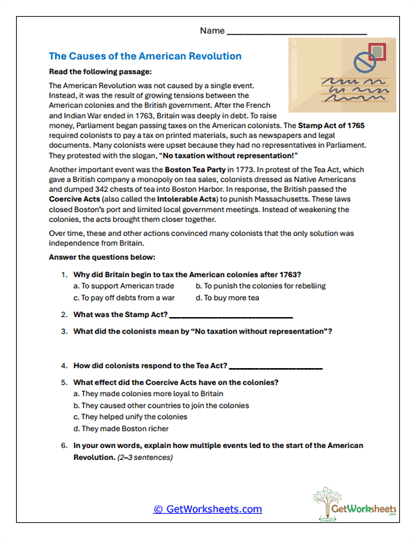
Causes of the Revolution
Students examine the roots of colonial resistance by exploring the Stamp Act, Tea Act, and other British policies that fueled rebellion. The reading passage introduces key events leading up to the Revolution and the famous cry of "No taxation without representation." Learners answer comprehension questions that strengthen their ability to trace cause and effect in history while deepening understanding of political dissent.
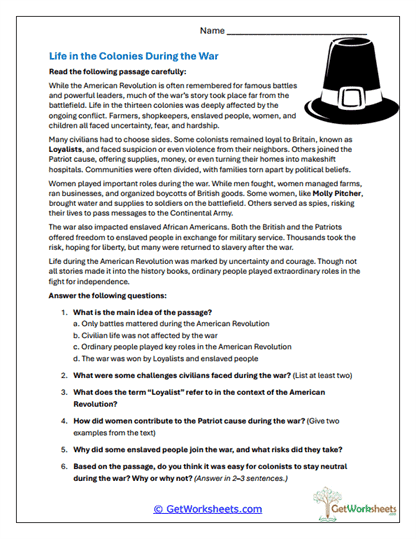
Colonial Life During the War
This worksheet offers a human perspective on the Revolutionary War by focusing on those who lived through it-women, enslaved people, Loyalists, and everyday colonists. Students read a detailed passage and use textual evidence to respond to questions about loyalty, hardship, and courage. The activity encourages empathy and critical analysis as learners uncover how war reshaped daily life for different groups.
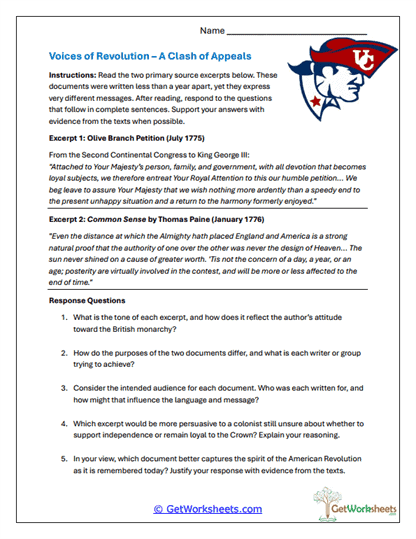
Comparing Revolutionary Voices
By reading excerpts from the Olive Branch Petition and Common Sense, students contrast two influential colonial viewpoints-one seeking peace, the other urging independence. They interpret tone, purpose, and audience to understand how rhetoric evolved during the Revolution. This exercise cultivates analytical reading skills and historical awareness of how persuasion shaped America's path to freedom. Students also practice drawing conclusions from primary sources with precision.
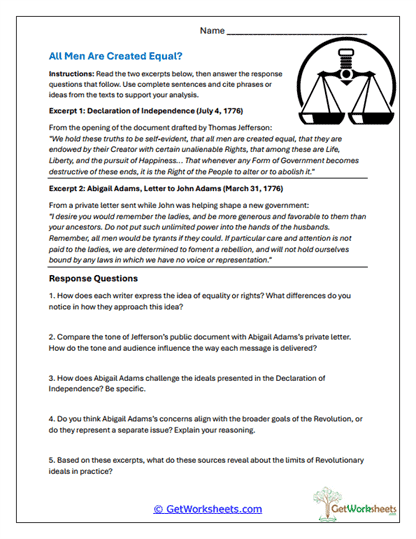
Equality in the Revolution
Through excerpts from the Declaration of Independence and Abigail Adams's famous letter, students analyze early debates about equality and rights. The worksheet asks learners to compare perspectives on liberty, gender, and representation during the Revolutionary period. By reflecting on how these ideals developed, students gain insight into both the progress and limitations of revolutionary thought. The activity also promotes discussion about how these ideas continue to resonate today.
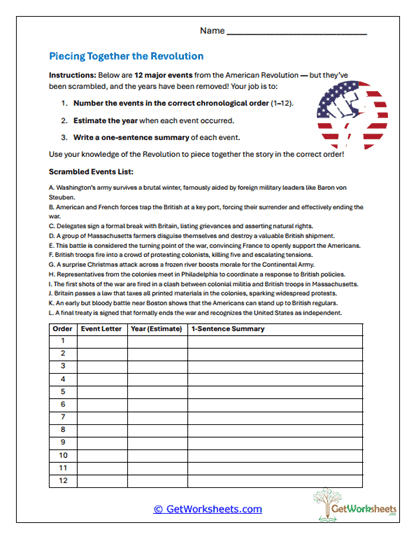
Timeline of the Revolution
Learners strengthen their chronological reasoning by arranging major events of the American Revolution in order. As they build a timeline from early protests to independence, students summarize key moments and visualize the progression of the war. This interactive task reinforces sequencing, summarization, and historical organization. It's an excellent tool for helping students connect events across time and recognize turning points in U.S. history.
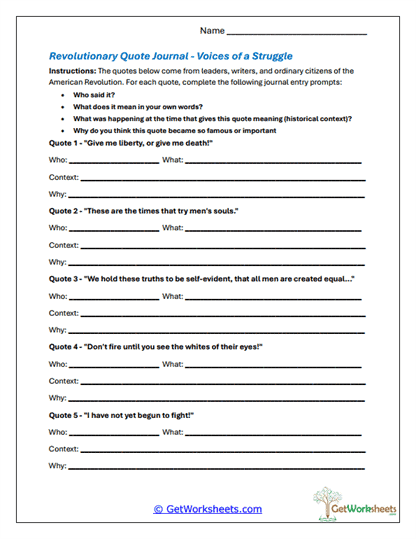
Revolutionary Quotes Journal
Students explore memorable words from influential figures of the Revolution, reflecting on what each quote reveals about the era's spirit. For every quotation, learners identify the speaker, interpret its meaning, and connect it to historical context. The journaling format promotes interpretive writing and critical reflection. It's a meaningful way for students to engage personally with the ideas that inspired independence.
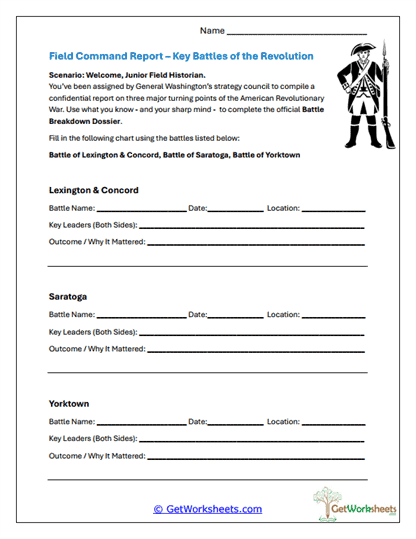
Key Battles Report
Acting as junior historians, students research and record details about the Battles of Lexington & Concord, Saratoga, and Yorktown. Each section guides them to summarize leaders, outcomes, and significance. The worksheet fosters clear, factual writing and helps learners see how key victories and losses influenced the war's outcome. It's an effective way to combine history, organization, and concise reporting.
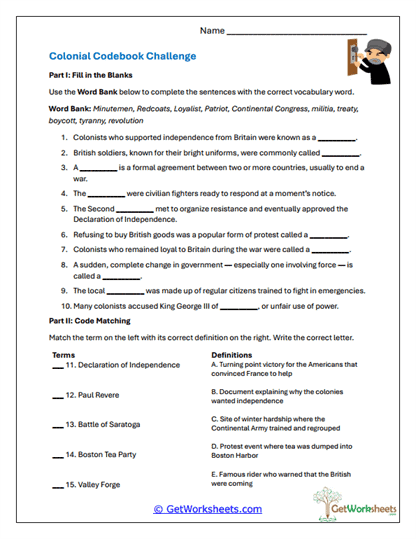
Revolutionary Vocabulary Challenge
This vocabulary-building worksheet reinforces essential terms such as "Patriot," "boycott," and "Continental Congress." Students complete fill-in-the-blank and matching exercises to demonstrate understanding of each word in context. By connecting terminology to historical events, they strengthen both reading comprehension and subject knowledge. The activity makes learning academic language meaningful and memorable.
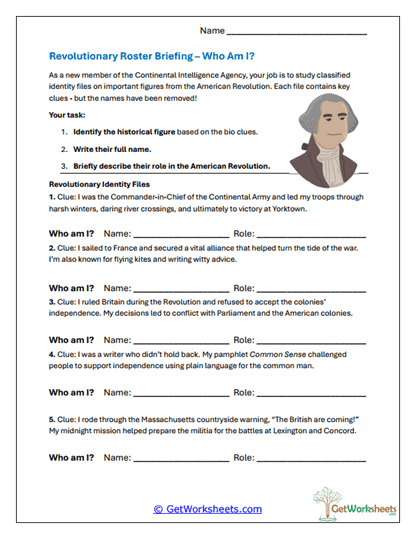
Who's Who in the Revolution
Students take on the role of intelligence agents deciphering clues to identify major figures like George Washington and Benjamin Franklin. Each prompt encourages inferential thinking as learners connect biographical hints to historical achievements. The exercise supports both historical recall and reasoning skills. It's an engaging and game-like way to review key contributors to independence.
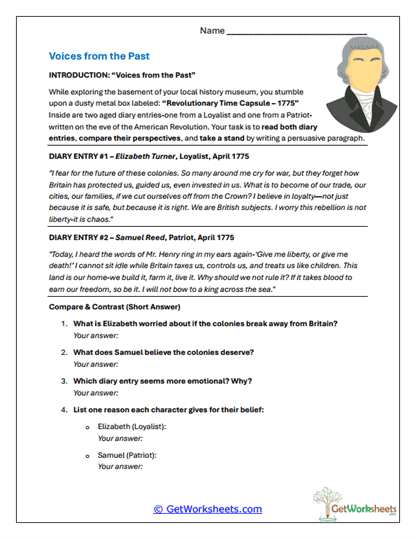
Comparing Loyalist and Patriot Perspectives
Through two contrasting diary entries, students explore how colonists experienced divided loyalties during the Revolution. They compare motivations, emotions, and viewpoints while answering comprehension and inference questions. This activity helps learners understand that history includes multiple perspectives, fostering empathy and nuanced interpretation. It also supports evidence-based discussion and writing practice.
American Revolution Quiz
This multiple-choice assessment tests knowledge of critical events, people, and documents from the Revolution. Students recall details about major battles, leaders, and foundational acts. The quiz serves as both a review and a diagnostic tool for teachers. It reinforces comprehension, factual recall, and application of key historical concepts.
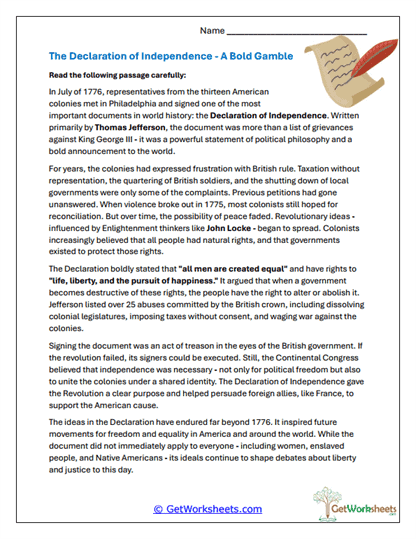
Declaration of Independence Reading
Students read an accessible overview of the Declaration of Independence, exploring its creation, purpose, and legacy. The passage highlights Enlightenment ideas and the document's influence on democratic movements worldwide. Learners analyze how the Declaration expressed colonial grievances and defined new principles of freedom. This reading deepens understanding of America's founding ideals and their enduring global significance.
Bookmark Us Now!
New, high-quality worksheets are added every week! Do not miss out!