AI Roleplaying Worksheets
About This Worksheet Collection
The AI Roleplaying collection gives students a playful and highly creative way to explore how voice, tone, and stylistic choices transform writing. Each worksheet invites learners to experiment with character voices-from pirates and vampires to cowboys, robots, samurai, and historical figures-so they can see how vocabulary, pacing, and imagery shift the mood and meaning of a passage. Students interact with a variety of writing tasks, including rewriting prompts, annotating texts, identifying mismatched tones, and adapting character voices to new contexts.
As they work through the collection, students deepen their understanding of authorial voice, genre conventions, and stylistic markers. They strengthen skills in close reading, textual analysis, creative rewriting, and tone manipulation while learning how subtle linguistic choices shape narrative personality. The worksheets also build critical thinking as students justify their interpretations, detect inconsistencies, and evaluate how effectively a voice communicates character traits. These activities help learners become more flexible, expressive, and confident writers.
Detailed Descriptions Of These Worksheets
Changing the Voice
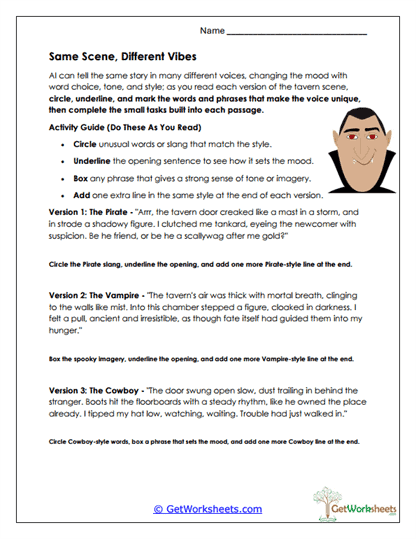
Students read three versions of the same scene written as a pirate, vampire, and cowboy, analyzing the stylistic choices that shape each voice. They annotate tone markers, imagery, and notable vocabulary before writing an additional sentence in the same style. This activity strengthens their awareness of how language creates atmosphere and personality. It also encourages creativity and close reading of descriptive detail.
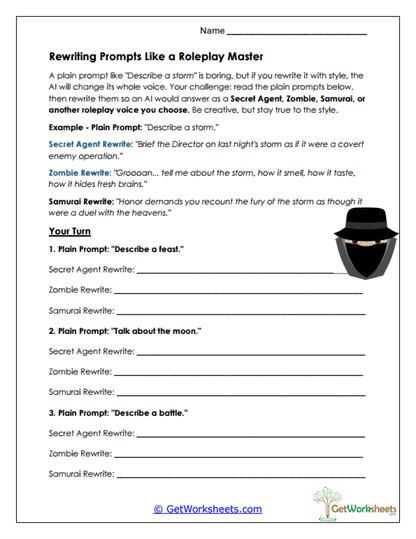
Roleplay Prompt Rewriting
In this worksheet, students transform simple prompts into character-specific versions written as a secret agent, zombie, and samurai. They learn how vocabulary and tone shift meaning as they adapt the same idea across distinct voices. The exercise promotes imaginative thinking and flexibility in writing. Students gain insight into how style and genre shape interpretation.
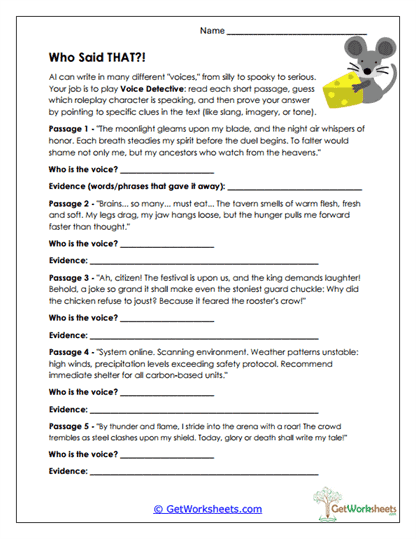
Voice Detective
Learners examine several passages and determine which fictional or roleplay voice is being used based on stylistic clues. They cite evidence such as archaic phrasing, humorous tone, or robotic formality to justify their answers. The activity reinforces inference skills and careful text analysis. It helps students recognize how voice and tone signal character identity.
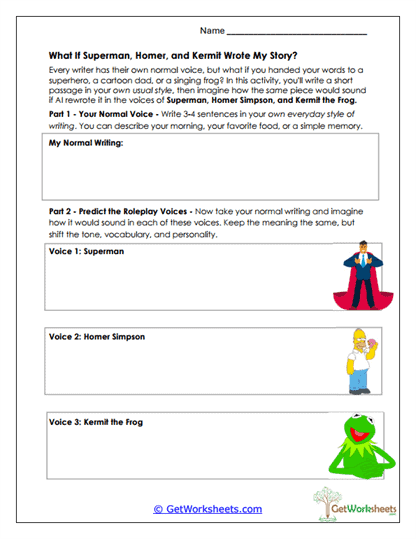
Predicting Roleplay Voices
Students write a short paragraph in their natural voice, then rewrite it as Superman, Homer Simpson, and Kermit the Frog. They adjust vocabulary, pacing, and personality while preserving the core meaning. This task develops creativity and strengthens understanding of how voice influences reader perception. It also builds skill in stylistic transformation.
From Neutral to Epic
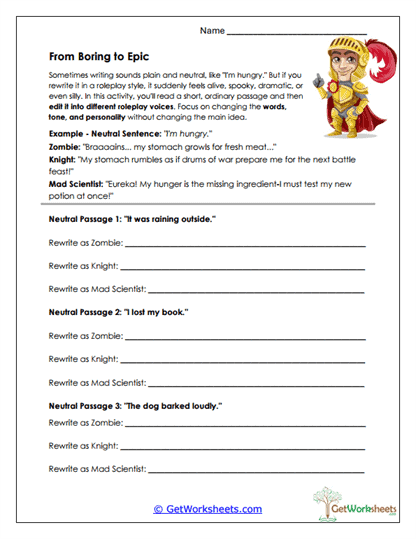
This worksheet guides students in converting basic sentences into stylized versions voiced by a zombie, knight, and mad scientist. They enhance imagery, tone, and vocabulary to reshape the neutral content. The activity highlights how genre-specific language shifts meaning and mood. Students practice expressive word choice and creative rewriting.
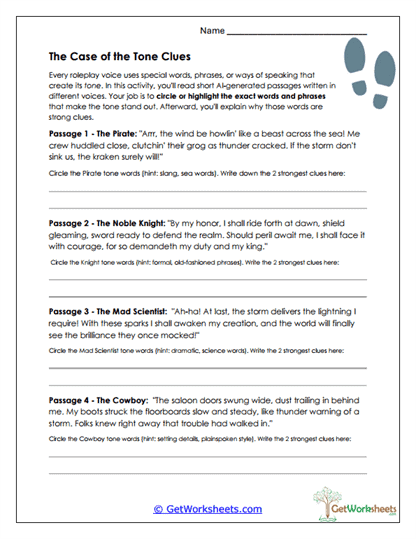
Tone Clue Investigation
Students read AI-generated passages in pirate, knight, mad scientist, and cowboy voices, identifying the specific word choices that signal each tone. They compile key markers and stylistic clues for each voice. This strengthens vocabulary analysis and understanding of tone construction. It helps students see how small differences in language shape narrative impression.
Mismatched Roleplay Detection
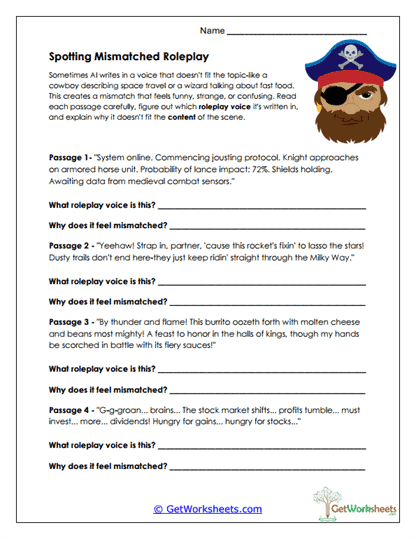
Learners analyze passages where the tone does not fit the content, such as a cowboy narrating a sci-fi moment or a pirate describing financial news. They identify the intended voice and explain how the mismatch creates confusion. This activity builds awareness of genre expectations and stylistic coherence. It encourages critical thinking about aligning tone with context.
Building Word Banks
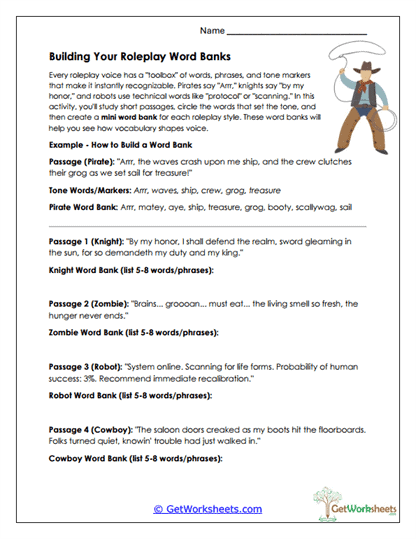
Students extract roleplay-specific vocabulary from passages written in pirate, knight, zombie, robot, and cowboy voices. They organize tone words into categorized lists that highlight stylistic markers. The exercise develops vocabulary awareness and provides future writing resources. It also helps students understand how repeated linguistic patterns define character voice.
Debugging Halloween Roleplay
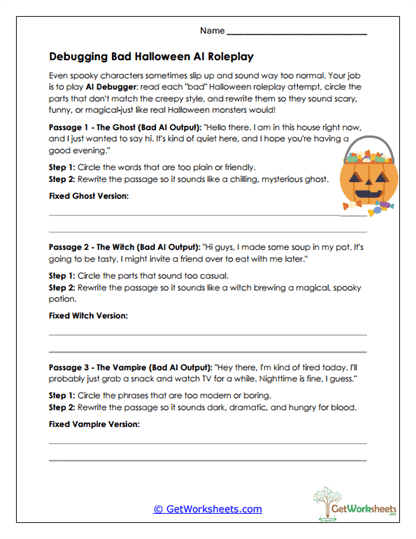
This worksheet presents Halloween-themed passages that lack an appropriate spooky voice. Students identify the mismatched phrases and rewrite each passage to fit ghost, witch, or vampire tones. The activity reinforces tone correction and genre accuracy. It also encourages creativity and detailed rewriting.
Debugging Athlete Roleplay
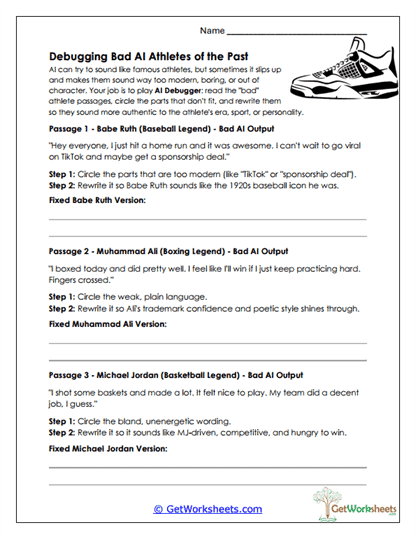
Students evaluate passages where legendary athletes speak with inaccurate or modernized voices. They identify lines that do not match the athlete's personality or era and rewrite them accordingly. The worksheet develops historical understanding, tone authenticity, and stylistic precision. It challenges students to merge creativity with contextual reasoning.
Character Bio Evaluation
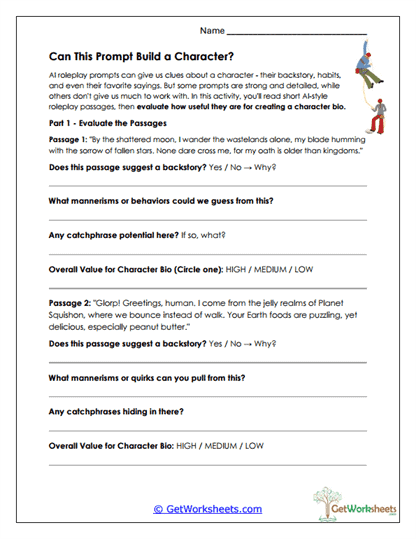
Students read short roleplay-style passages and evaluate how effectively each one contributes to a character biography. They identify hints about backstory, personality, and potential catchphrases while rating the passage's usefulness. This activity strengthens skills in character analysis and inference. It encourages thoughtful evaluation of narrative detail and voice.
Context-Swapping Roleplay
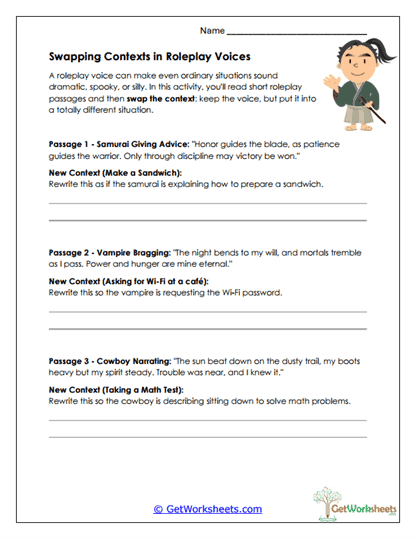
Learners rewrite samurai, vampire, and cowboy passages into entirely new contexts while preserving each voice. They analyze stylistic markers and creatively apply them to different scenarios. The exercise reinforces flexible writing and deepens understanding of how voice shapes meaning. It encourages students to adapt style without losing character identity.
Bookmark Us Now!
New, high-quality worksheets are added every week! Do not miss out!