AI Prompt Variations Worksheets
About This Worksheet Collection
This collection shows students how small changes in wording, tone, structure, and audience focus can dramatically reshape AI-generated responses. Through rewriting, comparing, ranking, and correcting prompts, learners gain hands-on experience with how language affects clarity, usefulness, and the direction of an AI's output. Each worksheet offers practical, low-stakes activities that help students build versatility in communication while deepening their understanding of how AI interprets instructions.
Across the set, students practice close reading, tone control, bias detection, audience adaptation, and structured reasoning. They learn to evaluate prompt strengths and weaknesses, rewrite confusing or contradictory instructions, and design variations that encourage clearer or more detailed answers. This collection strengthens digital literacy, builds confident prompting habits, and supports strong writing and analytical skills across academic subjects.
Detailed Descriptions Of These Worksheets
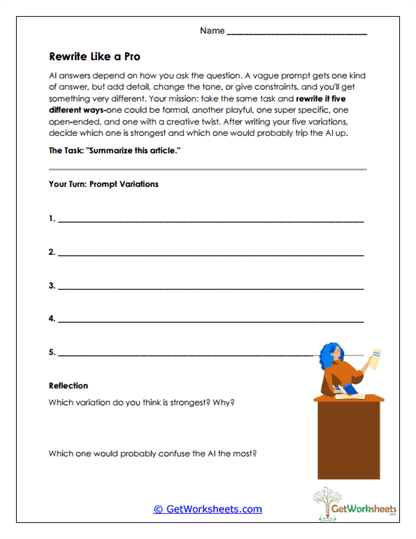
Rewrite Like a Pro
Students take a basic instruction and rewrite it in five distinct variations, adjusting tone, detail, and purpose. They reflect on which version communicates most clearly and which might lead to confusion. The activity encourages flexible writing and builds awareness of how wording influences AI output. It also strengthens audience-centered thinking.
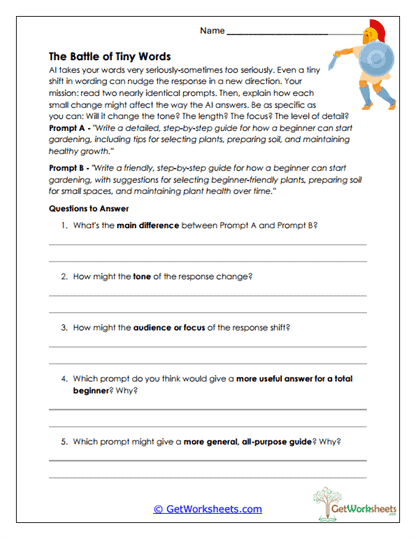
Tiny Word Differences
Learners compare two nearly identical gardening prompts to analyze how tiny wording changes affect the AI's response. Guided questions help them evaluate clarity, usefulness, and intended audience. This worksheet teaches precision in language and demonstrates AI sensitivity to subtle shifts in phrasing. It develops strong comparison and interpretation skills.
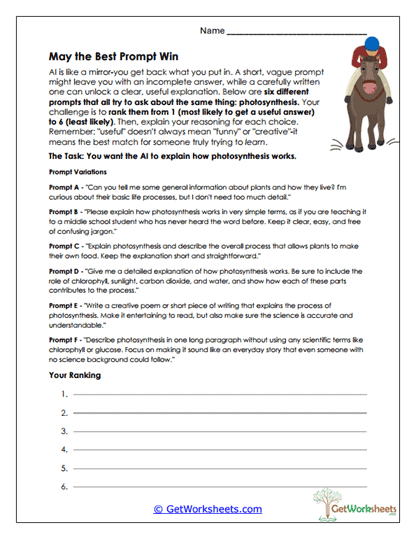
Rank the Prompts
Students examine six prompts about photosynthesis and rank them from most to least effective. They justify their rankings, explaining which qualities-clarity, tone, specificity-make certain prompts stronger for learning. The task builds analytical reasoning and helps students identify features of high-quality educational prompts.
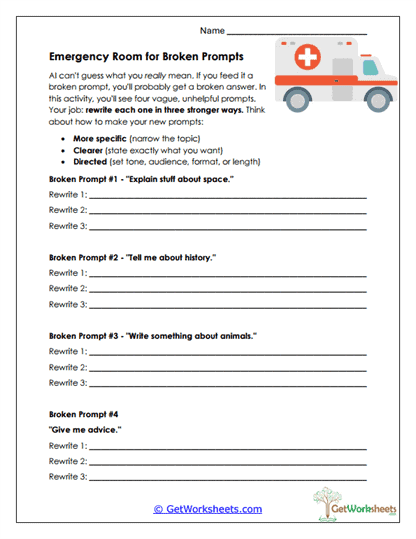
Fixing Broken Prompts
This worksheet provides vague or unhelpful prompts for students to improve. Learners rewrite each one in three clearer, more purposeful versions, strengthening prompt specificity and tone. The activity promotes confident revision and teaches how ambiguity affects AI-generated responses.
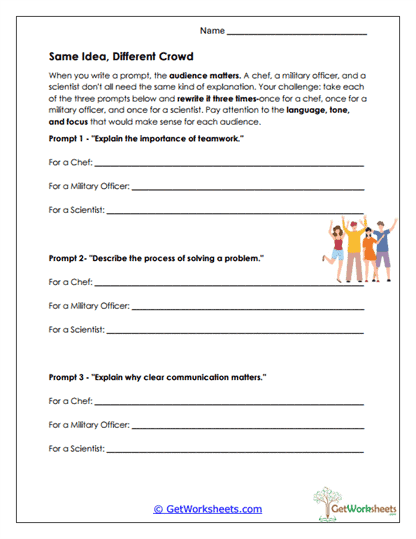
Audience Adaptation
Students rewrite three prompts for three different audiences: a chef, a military officer, and a scientist. They adjust vocabulary, detail, and framing to match each group's background. This task builds audience awareness and demonstrates how purpose and context shape communication.
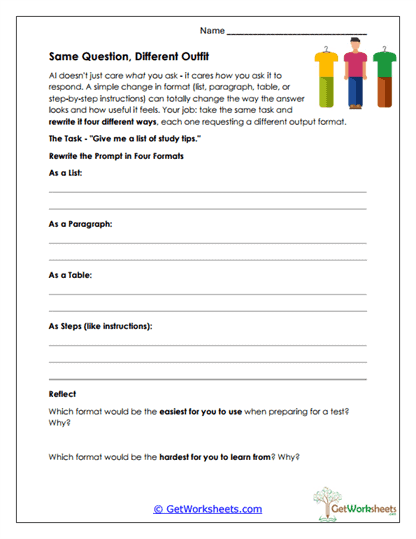
Output Format Changes
Learners transform a single request into four different formats: a list, a paragraph, a table, and step-by-step instructions. They reflect on which format helps them learn best and why. The activity reinforces flexibility in writing and highlights how format influences the structure of AI responses.
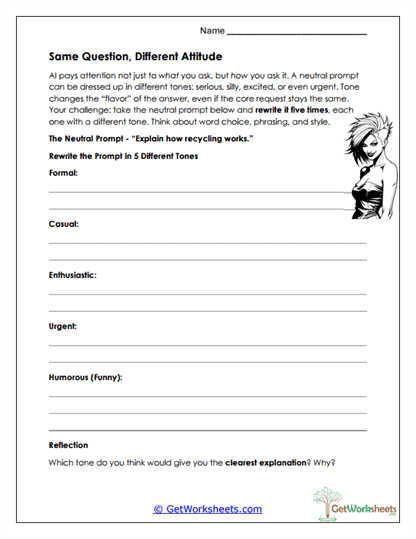
Tone Variations
Students rewrite the same basic prompt in five tones: formal, casual, enthusiastic, urgent, and humorous. This helps them understand how tone alters style and clarity without changing the core task. Through reflection, they consider which tone works best for clear communication.
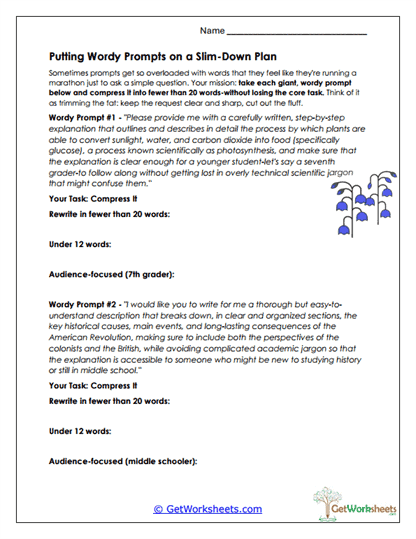
Prompt Slim-Down
Learners condense two long, wordy prompts into concise versions under twenty words. They focus on removing unnecessary details while preserving meaning. The worksheet builds concise writing skills and teaches effective, streamlined prompt design.
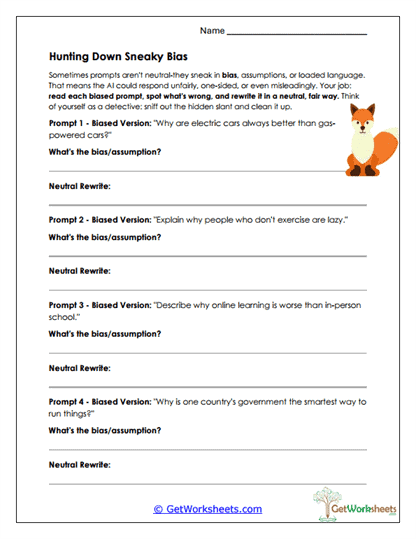
Bias Detection
Students analyze prompts containing hidden bias and rewrite them neutrally. They identify the problematic assumption in each one and practice ethical, fair communication. This activity strengthens critical thinking and teaches students how biased wording can distort AI output.
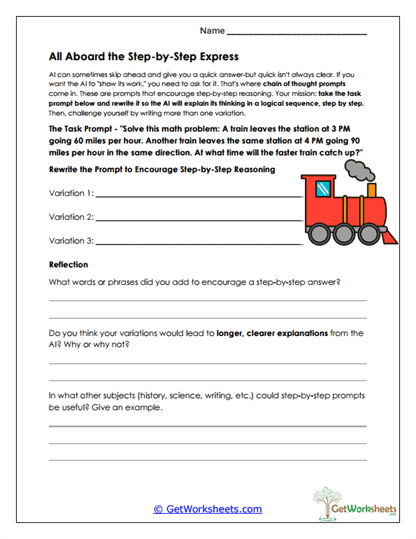
Step-by-Step Reasoning
Students modify a math problem prompt in three ways to encourage the AI to show its reasoning. They reflect on how phrasing affects the level of detail in the response. This worksheet builds logical sequencing skills and models techniques for promoting explainable output.
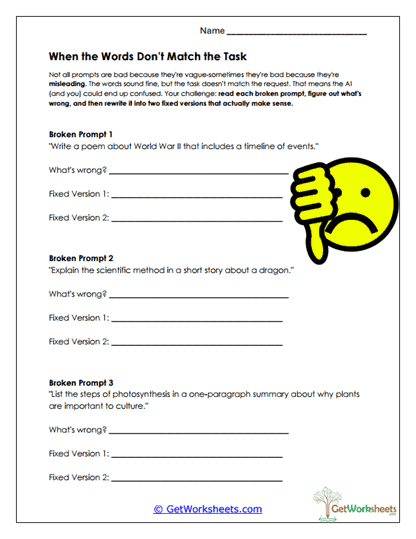
Mismatched Prompts
Learners examine prompts that include contradictory or confusing instructions and rewrite each one into two corrected versions. They identify hidden inconsistencies and practice transforming flawed wording into clear, aligned tasks. The activity builds analytical thinking and strengthens clarity in writing.
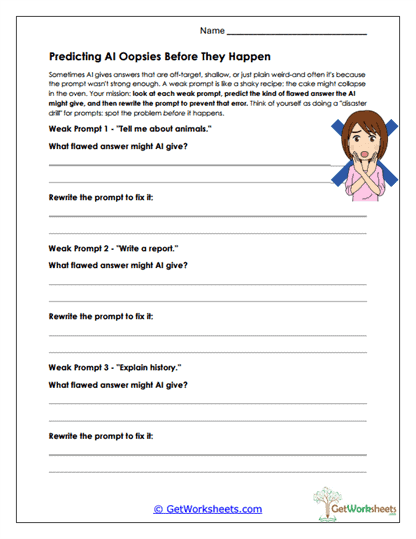
Predicting AI Mistakes
Students predict what kind of flawed responses weak prompts might produce, based on their understanding of ambiguity and vagueness. They then rewrite each prompt to prevent those errors. This worksheet teaches proactive troubleshooting and reinforces strong, purposeful prompting habits.
Bookmark Us Now!
New, high-quality worksheets are added every week! Do not miss out!