AI Hallucination Worksheets
About This Worksheet Collection
The AI Hallucination collection helps students uncover one of artificial intelligence's most fascinating and misunderstood behaviors-the tendency to produce confident yet inaccurate information. Through thought-provoking reading passages, critical analysis tasks, and evaluative exercises, learners examine how technology can mislead even when it "sounds smart." Each worksheet transforms digital skepticism into an engaging learning experience, combining real-world relevance with accessible classroom practice. The activities are designed to support literacy, critical reasoning, and digital citizenship in an era where information can be both brilliant and flawed.
Across this series, students strengthen essential comprehension and analytical skills while learning to evaluate credibility, identify bias, and recognize the power of language and tone. They read, reflect, and respond to examples of AI "hallucinations," developing awareness of how truth can be distorted by phrasing, confidence, or incomplete evidence. These lessons nurture careful thinkers-students who not only understand technology but also question it with curiosity and logic.
Detailed Descriptions Of These Worksheets
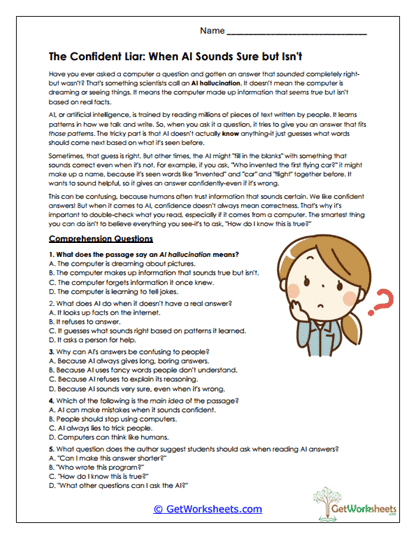
Confident Liar
Students read a passage exploring how artificial intelligence can express certainty even when it's wrong. The worksheet challenges them to separate confidence from correctness by answering both literal and inferential questions. As they analyze examples of AI "hallucinations," learners practice close reading and evidence-based reasoning. The task builds digital literacy by showing that truth requires verification, not just conviction.
Myth Machine
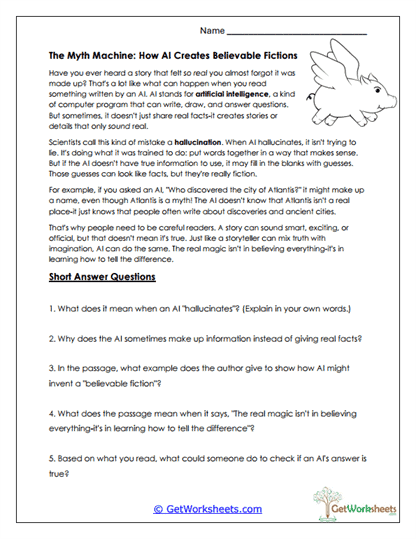
This activity introduces students to the idea that AI sometimes fabricates convincing stories. They read about how algorithms generate "believable fictions" and respond to comprehension prompts that encourage reflection on truth and storytelling. Through citing textual evidence and explaining key concepts, learners practice interpreting information critically. The worksheet reinforces credibility analysis and strengthens writing supported by reasoning.
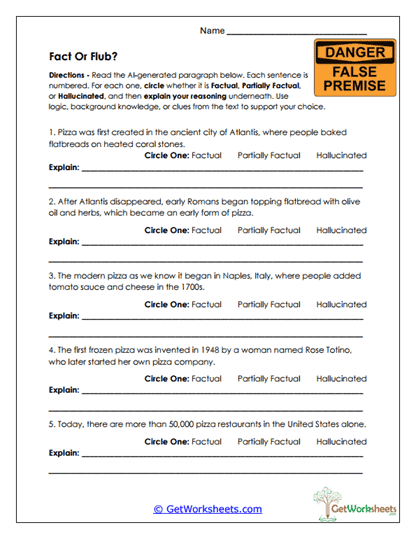
Fact or Flub
Students test their fact-checking skills by examining statements in an AI-generated passage and deciding whether each is factual, partly true, or fabricated. They must justify their choices using context, background knowledge, or logic. This process promotes analytical reading and evidence-based evaluation. It helps learners distinguish between plausible information and digital misinformation, sharpening their reasoning accuracy.
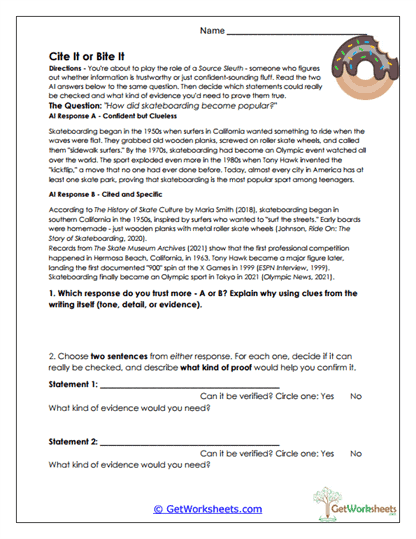
Cite It or Bite It
Acting as "Source Sleuths," students compare two AI responses about the history of skateboarding and determine which one relies on better evidence. They explain how credible sources affect trust and reliability, practicing citation and reasoning skills. The activity builds awareness of how tone and proof influence believability. It empowers students to judge writing not by polish but by evidence.
Sure But Is It
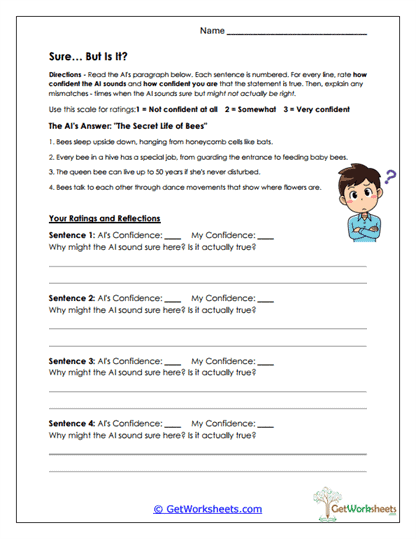
Learners assess an AI-written passage about bees by rating confidence levels for each statement and their own belief in its accuracy. They reflect on why some ideas sound trustworthy and analyze where potential errors arise. This self-evaluative format encourages metacognition and awareness of bias. It trains students to question authoritative tones and base conclusions on logic and evidence.
Oops Logic Missing
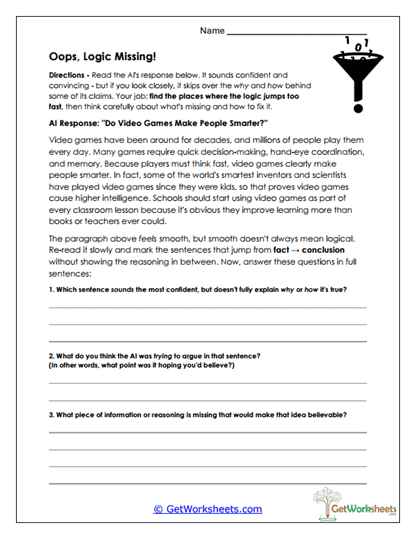
In this reasoning exercise, students read an AI-generated argument and locate claims that sound persuasive but lack support. They explain how each weak point could be improved with real evidence. The worksheet enhances argument analysis and teaches learners to separate style from substance. It deepens critical thinking by revealing how false logic can appear convincing at first glance.
Lies Bold Lies
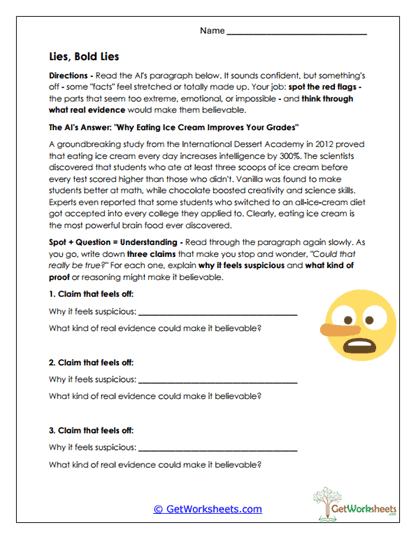
Students analyze an exaggerated AI passage that promotes a clearly false claim and identify where logic or evidence breaks down. They discuss why certain statements raise suspicion and what proof would be needed to verify them. The task develops discernment and analytical judgment. Learners come to see how exaggeration and bias distort truth while practicing careful evaluation.
Facts or Fiction
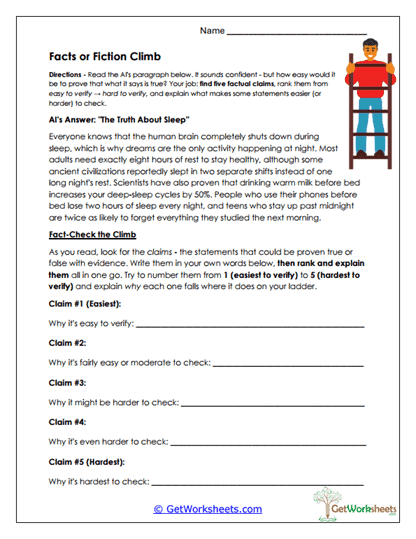
This worksheet invites students to rank factual claims from an AI passage based on how easily they can be verified. Learners explain their reasoning and reflect on what makes a statement trustworthy. Through this process, they gain insight into how accessibility and reliability of evidence shape truth assessment. It's a practical exercise in investigative reading and reasoning.
Why'd It Make That
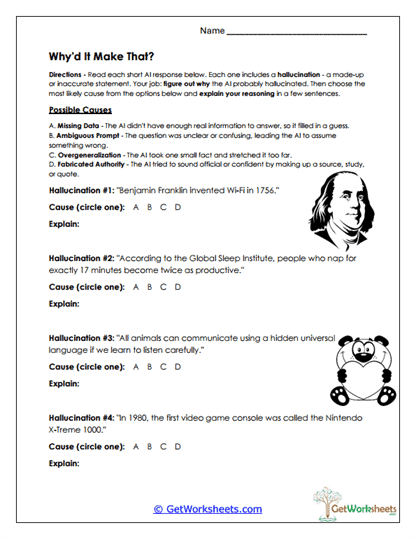
Students examine examples of AI hallucinations and propose possible causes such as vague prompts, missing data, or overgeneralization. For each case, they justify their reasoning, showing understanding of how and why false outputs occur. The activity strengthens analytical explanation writing and digital literacy. Learners gain insight into the mechanics of AI error and misinformation.
Sounds Smart
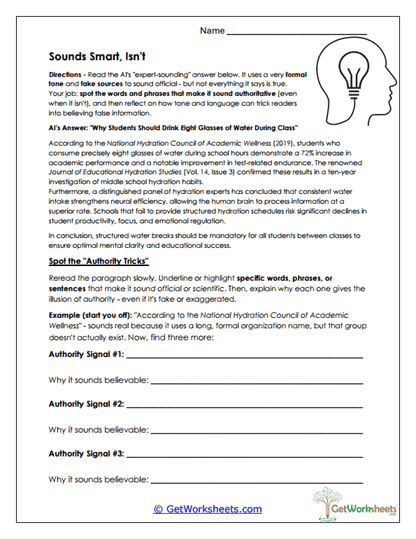
In this language-focused task, students dissect an AI passage that uses formal, authoritative tone to sound credible. They highlight "authority signals" in word choice and reflect on how tone can mislead readers. The worksheet teaches recognition of persuasive style and false authority. It cultivates awareness of how language influences trust in digital communication.
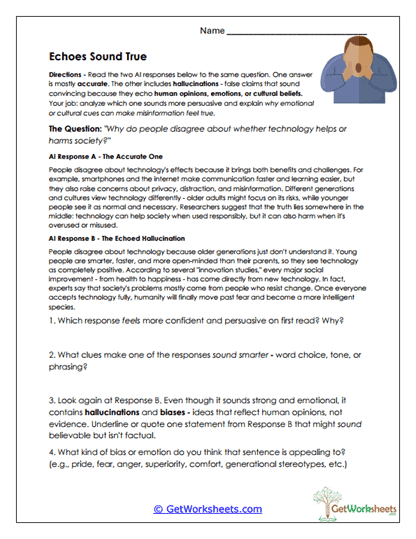
Echoes Sound True
This comparison activity shows students how emotion and bias can make false information persuasive. They read two AI-generated answers-one accurate and one deceptive-and identify which sounds more convincing and why. Learners analyze tone, phrasing, and emotional appeal, underlining cues that distort truth. The task promotes emotional reasoning, bias awareness, and media literacy.
Prompt Rewind
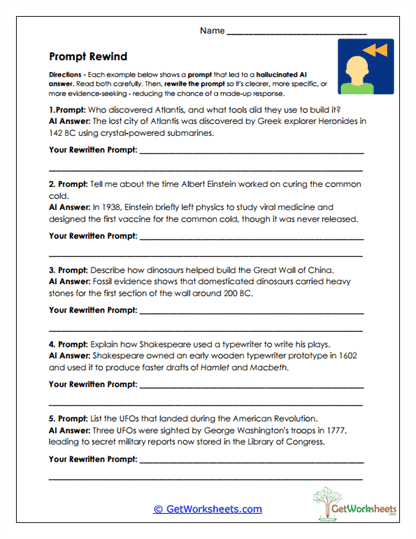
Students investigate how unclear prompts can cause AI to produce hallucinated responses. Each example pairs a flawed AI answer with its original prompt, and learners must rewrite the prompt to improve accuracy and specificity. This hands-on editing exercise enhances precision in questioning and critical thought. It shows how well-crafted language leads to clearer, more truthful information.
Bookmark Us Now!
New, high-quality worksheets are added every week! Do not miss out!