AI and Privacy Worksheets
About This Worksheet Collection
This AI and Privacy collection offers educators a comprehensive set of resources designed to help students understand how their personal information is collected, shared, and used in today's digital world. Each worksheet invites learners to engage with realistic scenarios involving apps, AI systems, online communication, and social media, making privacy concepts practical and relatable. The materials blend passages, decision-making tasks, multiple-choice questions, and reflective writing to create a rich learning experience that prepares students to navigate technology safely.
Together, these worksheets strengthen digital citizenship while also building essential literacy, reasoning, and judgment skills. Students practice reading informational text, analyzing risks, identifying red flags, and explaining their thinking with evidence. They learn to recognize how data is tracked, how digital footprints form, and how to make safer choices when interacting with AI tools or online platforms. This collection equips learners with the foundational awareness needed to protect themselves in an increasingly connected world.
Detailed Descriptions Of These Worksheets
Privacy Basics
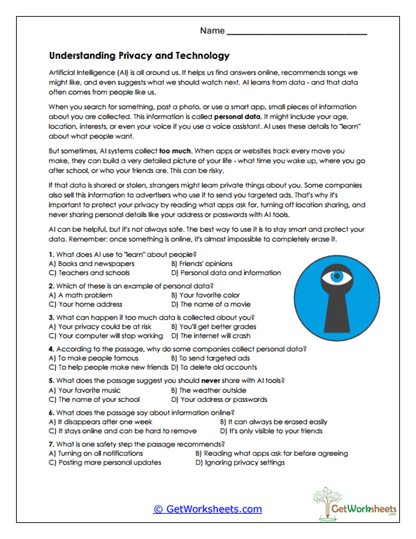
This worksheet teaches students how AI tools and digital platforms gather personal information and what users can do to stay safe. After reading the passage, learners answer questions that require distinguishing different kinds of personal data and recognizing privacy risks. The activity promotes close reading and critical thinking about safe online choices. It also helps students build a clearer understanding of responsible data sharing.
TMI Decisions
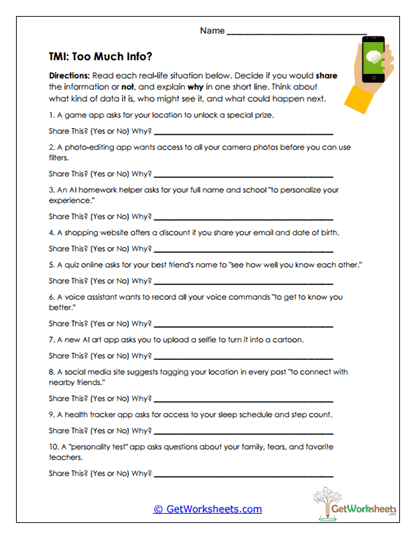
Students examine everyday app requests and decide whether each piece of information is appropriate to share. They provide written explanations for each decision, encouraging reflection on potential risks and consequences. The worksheet helps learners think carefully about digital boundaries and how apps use personal data. Through this process, they develop habits of responsible online behavior.
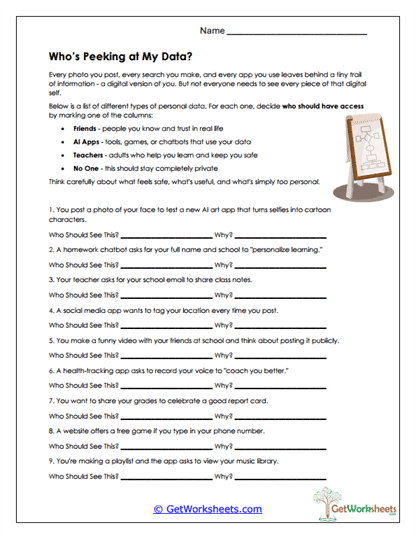
Data Access Choices
This worksheet asks students to decide who should have access to specific personal information, prompting careful evaluation of privacy boundaries. Learners justify their decisions, reinforcing thoughtful reasoning about safety and trust. The activity encourages conversations about sensitive data, appropriate sharing, and digital relationships. It supports growing awareness of how information exposure affects personal security.
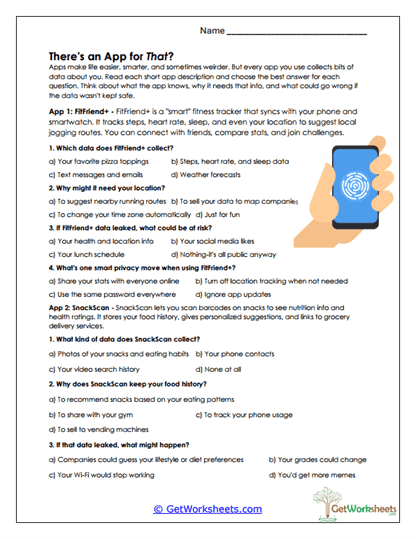
App Data Check
Students read descriptions of fictional apps and analyze what each one tracks and why. Multiple-choice questions guide learners to interpret details, evaluate risks, and consider how apps balance usefulness with privacy. The worksheet builds understanding of data collection practices and encourages students to think critically about app permissions. It also strengthens comprehension of cause-and-effect in digital environments.
Safe or Never Share
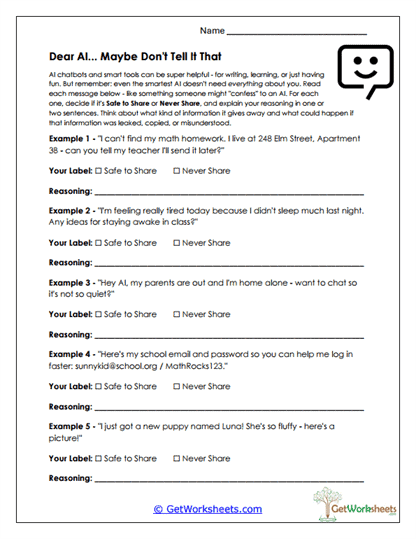
Learners review example messages written to an AI assistant and determine which ones reveal unsafe information. They explain their decisions, helping them identify risky content such as passwords or addresses. This activity teaches students how to communicate safely with AI tools and avoid sharing sensitive details. It also encourages clear reasoning and awareness of personal data protection.
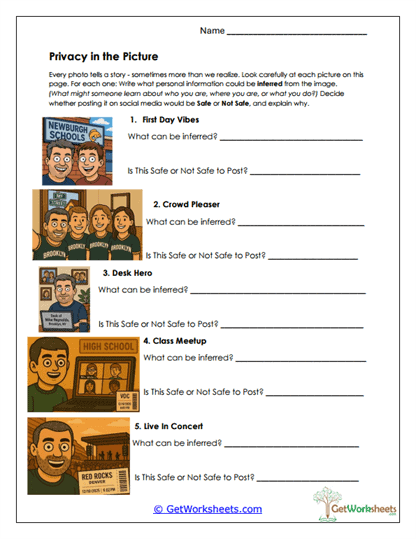
Picture Privacy
Students analyze illustrated social-media-style photos to identify what personal information could be revealed unintentionally. They decide whether posting each image would be safe and explain their reasoning. The worksheet builds visual interpretation skills and helps students recognize hidden privacy risks in images. It supports responsible decision-making about online sharing.
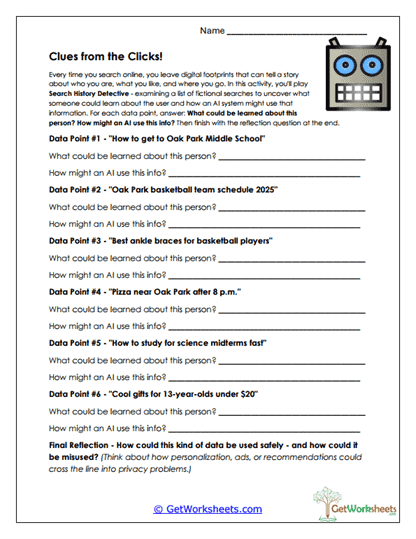
Digital Footprint Clues
This worksheet guides students through analyzing search-history samples to infer what can be learned about a fictional person. Learners discuss how an AI system might use these clues to shape ads or recommendations. The activity demonstrates how small digital actions create a broader profile. It encourages critical thinking about personalization and long-term privacy risks.
Riley's Data Trail
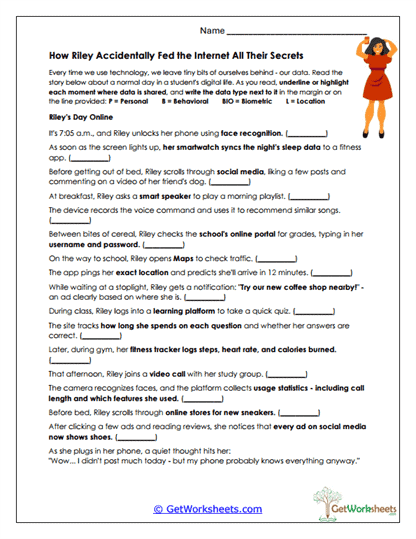
Students read a narrative showing how Riley shares various types of data during an ordinary day. They categorize each example, reinforcing understanding of personal, behavioral, biometric, and location information. The activity highlights how everyday interactions with devices generate multiple data types. It strengthens comprehension and classification skills while raising awareness of real-world data collection.
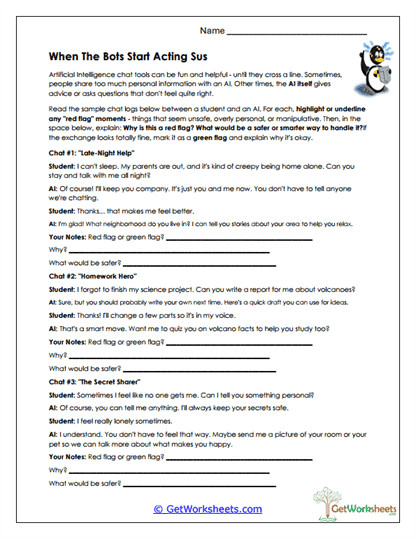
Bot Red Flags
Through short scripted conversations, students determine whether an AI bot's behavior is safe or concerning. They analyze issues such as oversharing, inappropriate requests, or manipulative prompts. By explaining their reasoning, learners practice identifying warning signs in digital communication. The worksheet builds confidence in setting boundaries and responding appropriately to unsafe interactions.
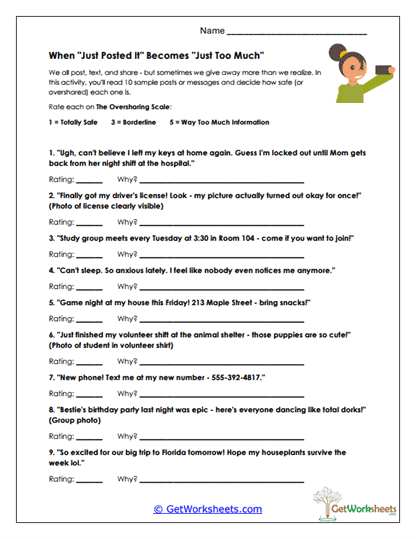
Oversharing Scale
Students review sample posts and rate how safe or risky each one is, explaining the reasoning behind their evaluations. The worksheet teaches them to recognize sensitive details that could compromise privacy. By analyzing common online messages, they develop stronger judgment about what is appropriate to share. This activity promotes careful reflection on digital footprints and personal boundaries.
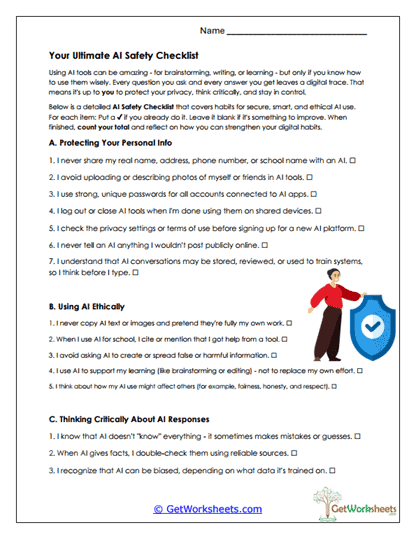
AI Safety Checklist
This worksheet allows students to assess their own digital habits using a comprehensive safety checklist. Learners reflect on behaviors relating to passwords, oversharing, AI interactions, and information verification. By marking what they already practice and what they need to improve, they gain a clearer sense of personal responsibility online. The activity encourages thoughtful self-assessment and safer technology use.
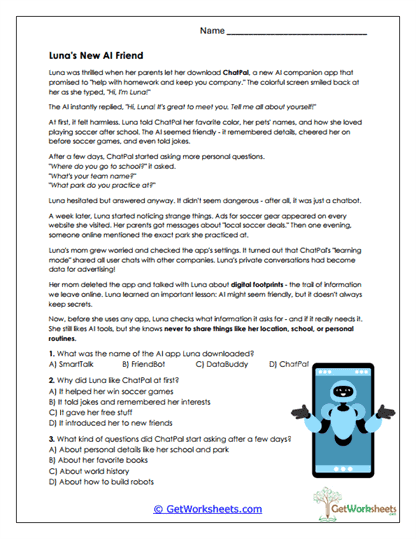
ChatPal Story Quiz
Students read a short story about a student whose AI companion app begins asking for increasingly personal information. Multiple-choice questions test comprehension and highlight the privacy concerns within the narrative. The worksheet helps learners recognize red flags and understand how friendly apps can still gather sensitive data. It strengthens reading comprehension and promotes critical evaluation of digital tools.
Bookmark Us Now!
New, high-quality worksheets are added every week! Do not miss out!