AI Worksheets
-
AI Agent Basics
-
AI and Privacy
-
AI Data Table and Chart Makers
-
-
AI Feedback Loop
-
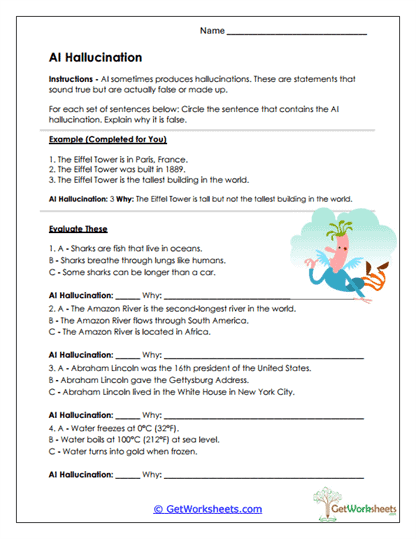
AI Hallucination
-
AI Mistake Fixers
-
AI Prompt Variations
-
AI Roleplaying
-
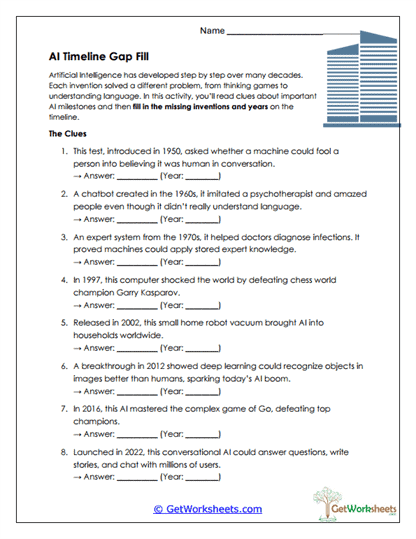
AI Timeline Major Inventions
-
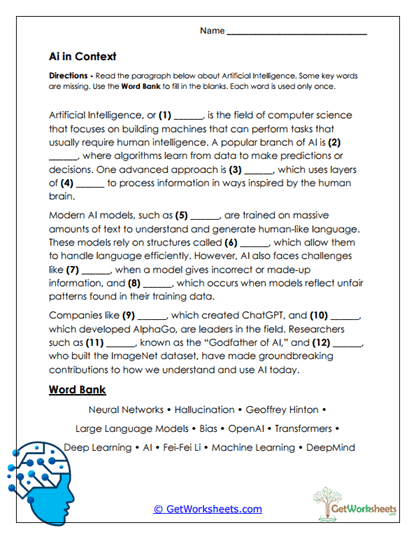
AI Vocabulary
-
AI vs. Human Thinking
-
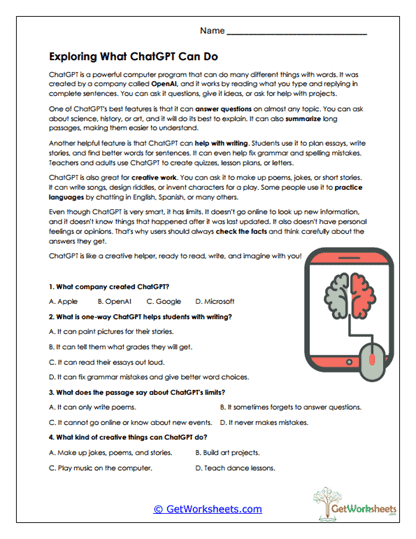
ChatGPT Activities
-
Claude AI Activities
-
Context Packing
-
Data Labeling Game
-
Difference Between Robots and AI
-
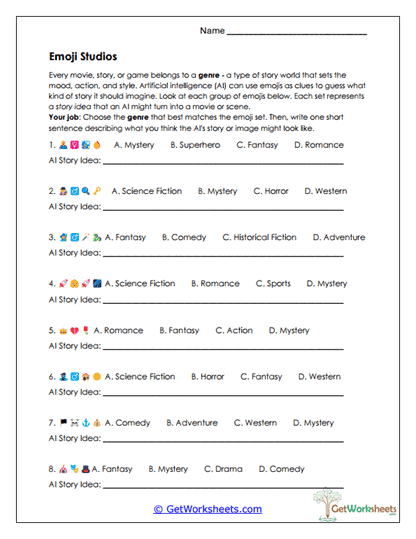
Emoji AI Prompt Challenge
-
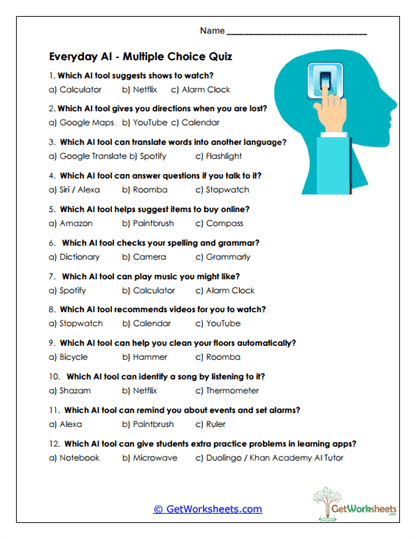
Everyday Examples of AI
-
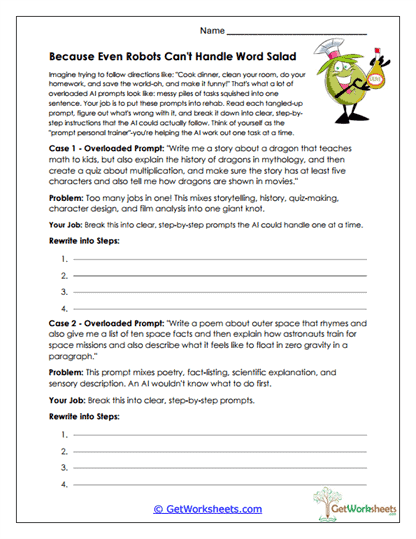
Fixing Bad AI Prompts
-
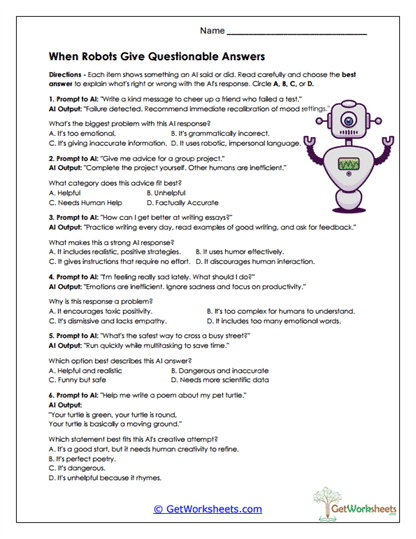
Good vs. Bad AI
-
Google Gemini Activities
-
History of AI
-
How LLMs Work
-
How to Cite AI as a Source
-
Iterative Refinement Loop
-
Microsoft Copilot Activities
-
Myths About AI
-
Parts of an AI System
-
Prompt Sandwich Template
-
Role of Bias in AI
-
Short Prompt vs. Long Prompt
-
Small vs. Big AI Models
-
Spotting AI
-
The AI Industry
-
Understanding AI Prompt Outputs
-
What is Artificial Intelligence
-
Why Do AI Models Make Mistakes
-
Would You Trust AI
-
Writing a Good AI Prompt
Artificial Intelligence (AI) Worksheets Collection
Artificial Intelligence is quickly becoming one of the most important topics for learners to understand, shaping how people work, communicate, and solve problems. This worksheet collection introduces students to what AI is, how it works, and why learning about it now builds crucial digital literacy skills. Through structured activities, learners gain confidence exploring a topic that influences technology, creativity, and decision-making across many areas of life.
Inside this collection, students practice thinking like AI agents, analyzing data, recognizing patterns, improving prompts, and understanding the limits of machine intelligence. Worksheets include vocabulary builders, scenario-based reasoning, timeline exercises, comparison charts, roleplaying tasks, feedback-loop mapping, myth-busting worksheets, and ethical thinking prompts. Each activity helps learners make sense of complex AI concepts in simple, engaging ways that strengthen critical thinking and communication skills.
This main collection also connects naturally to a wide range of subtopic worksheet sets. Each sub-collection lets learners dive deeper into specific questions about how AI functions, how to use it responsibly, and how different models compare. Educators can choose one pathway or explore them all to build a complete, modern AI curriculum that grows with student understanding.
Subtopic Worksheet Collection Descriptions
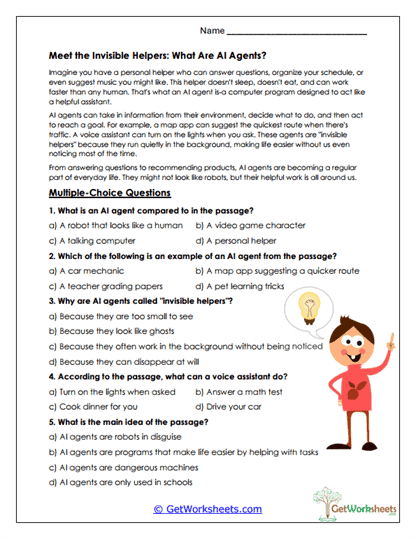
AI Agent Basics
These worksheets teach learners what AI agents are and how they make decisions based on inputs and goals. Understanding this foundation helps students grasp how modern systems behave. Recognizing agent behavior supports clearer thinking about how technology interacts with everyday tasks.
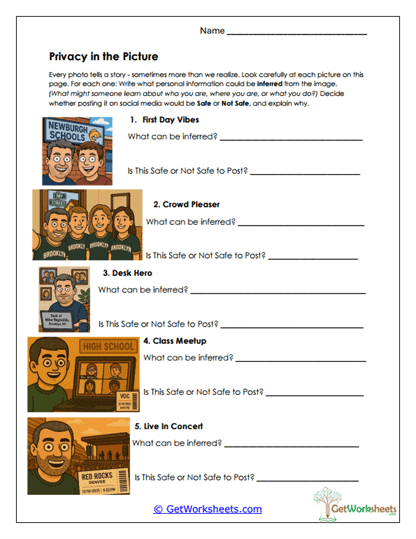
AI and Privacy
Learners explore how AI systems handle data and why privacy matters in digital environments. This builds awareness of ethical responsibilities connected to using technology. It helps students make thoughtful choices when sharing information online.
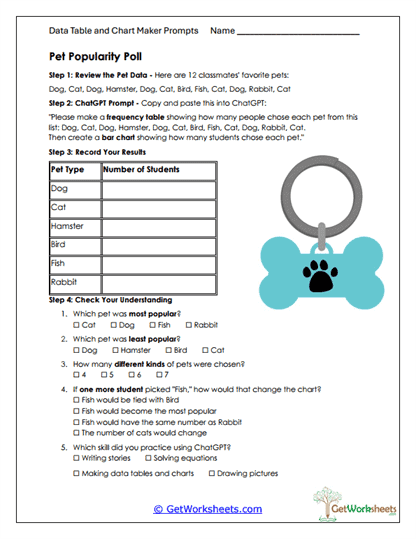
AI Data Table and Chart Makers
These worksheets guide students in organizing information into tables and charts that AI can interpret. This skill strengthens data literacy and structured thinking. Learning to format information clearly helps with communication in many subjects and settings.
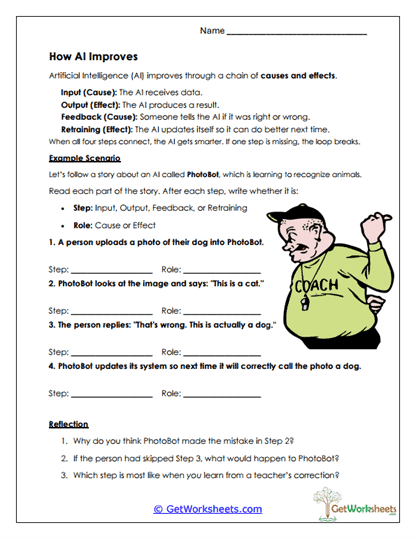
AI Feedback Loop
Students examine how AI systems learn from repeated input and why feedback loops shape model behavior. This supports academic understanding of iteration and system design. It encourages learners to notice improvement cycles in daily problem-solving.
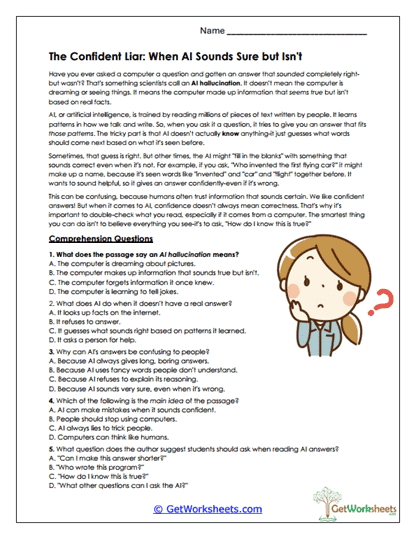
AI Hallucination
These worksheets focus on why AI sometimes generates incorrect or invented information. Understanding this teaches students to evaluate outputs critically. This awareness builds better judgment when using digital tools for research or writing.
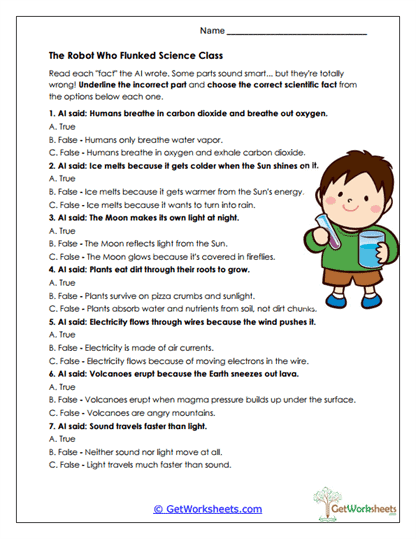
AI Mistake Fixers
Learners practice identifying AI errors and rewriting prompts or inputs to correct them. This strengthens reasoning and revision skills. Applying this process helps students solve problems carefully and adapt to unexpected outcomes.
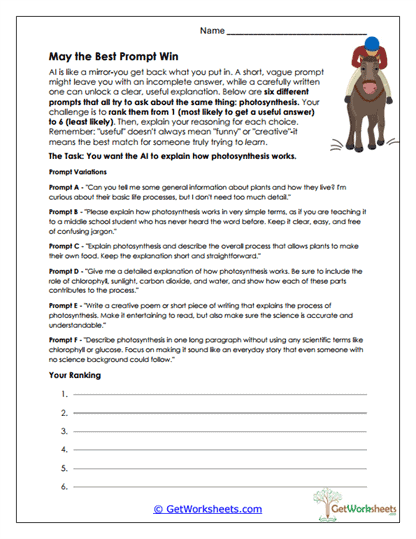
AI Prompt Variations
These activities show how different prompt styles change the quality and direction of AI responses. This improves language precision and experimentation in academic tasks. Becoming flexible with instructions benefits communication across many situations.
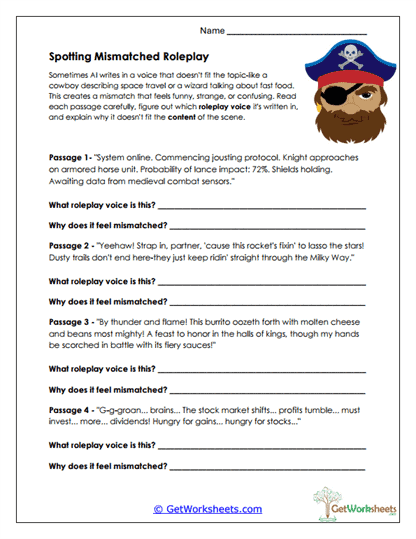
AI Roleplaying
Worksheets encourage learners to explore AI through character-based scenarios and goal-oriented interactions. This boosts creative thinking and applied understanding. Roleplay makes complex concepts relatable and easier to remember.
AI Timeline Major Inventions
Students map major milestones in AI development to understand how the field evolved. This supports chronological reasoning and contextual knowledge. It helps learners see how innovation builds over time.
AI Vocabulary
These worksheets introduce key terms like "machine learning," "dataset," and "model." Building vocabulary supports comprehension of readings and discussions. Knowing these terms empowers students to participate confidently in tech conversations.
AI vs. Human Thinking
Learners compare how humans and AI approach tasks, decisions, and problem solving. This teaches analytical thinking and comparison skills. Understanding these differences helps students judge when to rely on technology and when to use human insight.
ChatGPT Activities
Students practice using ChatGPT for structured tasks, creative writing, and information processing. This builds familiarity with conversational AI interfaces. Skillful use of tools like ChatGPT enhances productivity and creativity.
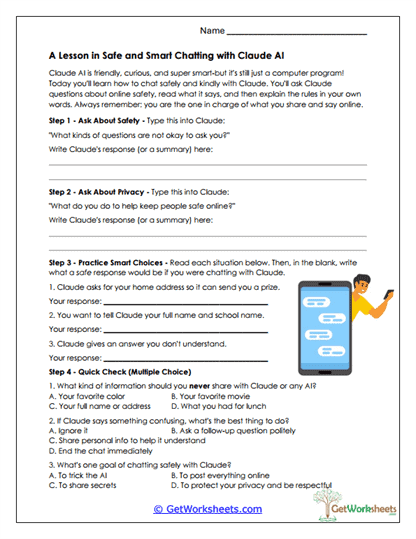
Claude AI Activities
These worksheets explore how to interact effectively with Claude AI to generate ideas or solve problems. This encourages adaptability across different AI platforms. It prepares students to work with a variety of emerging tools.
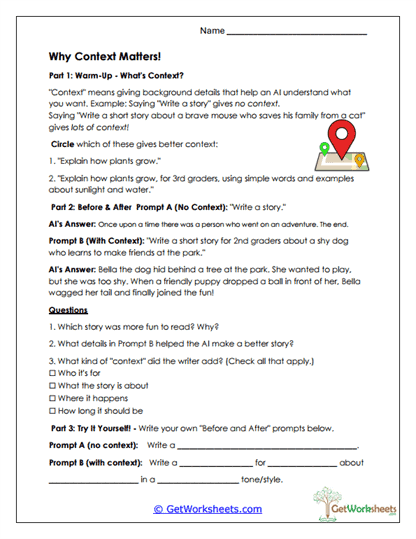
Context Packing
Learners practice condensing information so AI models understand longer or complex tasks. This strengthens summarization and organization skills. Being able to package information clearly supports efficient communication.
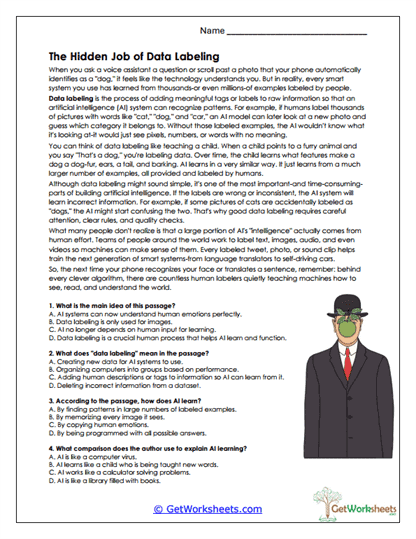
Data Labeling Game
These worksheets turn dataset labeling into an engaging, skill-building activity. Understanding labeling teaches learners how AI training works behind the scenes. It encourages attention to detail in all types of classification tasks.
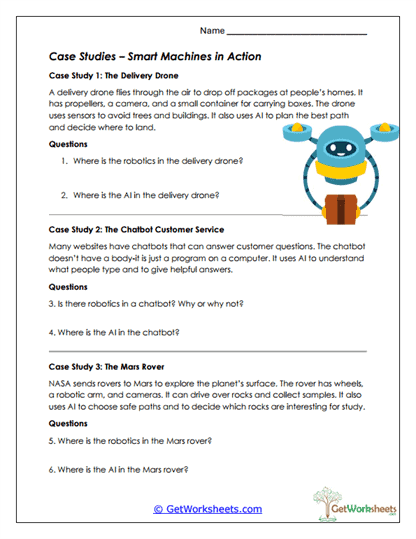
Difference Between Robots and AI
Students identify clear distinctions between physical robots and digital intelligence systems. This builds conceptual clarity and reduces common misconceptions. Recognizing the difference helps learners understand modern technologies more accurately.
Emoji AI Prompt Challenge
Learners experiment with creating prompts using emojis that AI must interpret. This strengthens symbolic reasoning and creativity. It also demonstrates how meaning can be conveyed in compact, expressive forms.
Everyday Examples of AI
These worksheets highlight where learners encounter AI in daily routines. Observing these examples builds practical understanding and awareness. Identifying familiar uses makes the larger concepts feel approachable.
Fixing Bad AI Prompts
Students learn to recognize weak prompts and rewrite them for clarity and accuracy. This supports strong communication and revision habits. Improving prompts helps students achieve better outcomes with any digital tool.
Good vs. Bad AI
Learners evaluate examples of helpful versus harmful AI behavior. This builds skills in ethical reasoning and critical analysis. Understanding benefits and risks encourages thoughtful technology use.
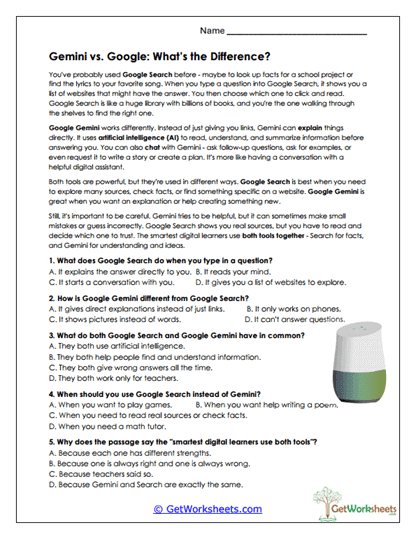
Google Gemini Activities
These worksheets help students explore interactions with Google Gemini for learning and creativity. This strengthens multi-platform AI skills. Becoming comfortable with different tools supports adaptability in future learning.
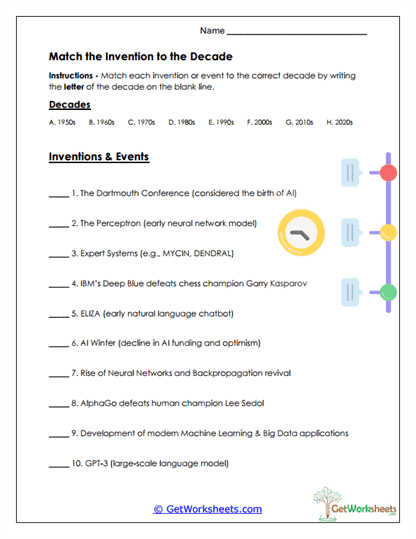
History of AI
Students trace the origins and growth of artificial intelligence over time. This enriches background knowledge and conceptual understanding. Seeing how ideas developed helps learners connect past innovations to present technologies.
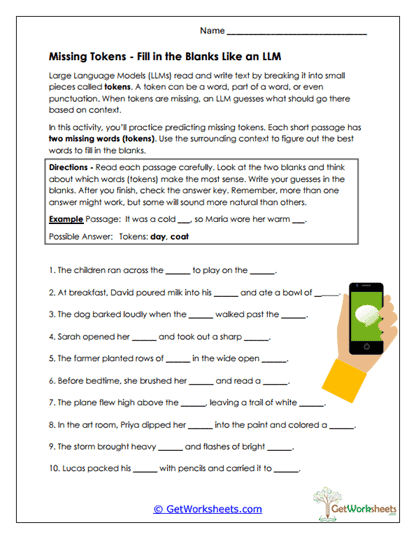
How LLMs Work
These worksheets break down large language model mechanics in a clear, approachable way. Learning this enhances students' understanding of algorithmic reasoning. It builds confidence in navigating advanced digital tools.
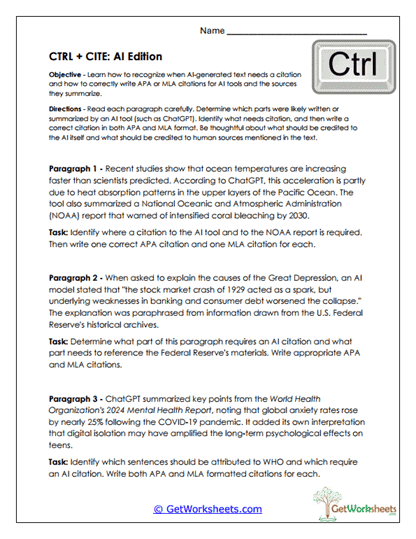
How to Cite AI as a Source
Learners practice citing AI-generated content correctly and responsibly. This supports academic integrity and proper documentation. Knowing how to reference digital tools helps students communicate their process clearly.
Iterative Refinement Loop
Students practice revising prompts and outputs step-by-step to improve results. This mirrors strong academic writing and editing habits. Understanding iteration helps learners approach any task with patience and structure.
Microsoft Copilot Activities
These worksheets guide learners in using Microsoft Copilot for writing, coding, and research tasks. This expands digital tool proficiency. Comfort with multiple AI assistants supports success in diverse environments.
Myths About AI
Students explore common misconceptions and compare them to accurate information. This builds critical thinking and media literacy. Clearing up myths helps learners make informed judgments about technology.
Parts of an AI System
These worksheets introduce components such as data, algorithms, and interfaces. Understanding parts strengthens system-level thinking. Recognizing structure supports learners in analyzing how tools function.
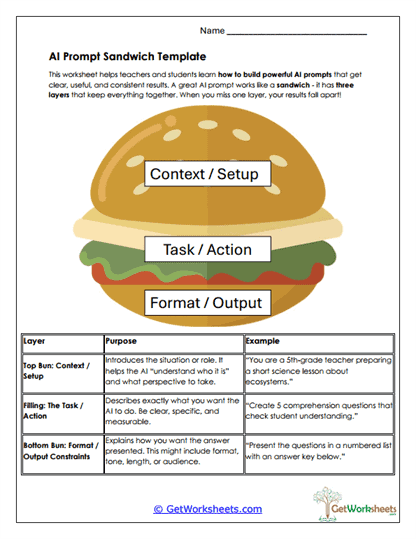
Prompt Sandwich Template
Students use a structured prompt format to guide AI responses more effectively. This teaches clarity and logical organization. Structured prompting helps in crafting instructions across many subjects.
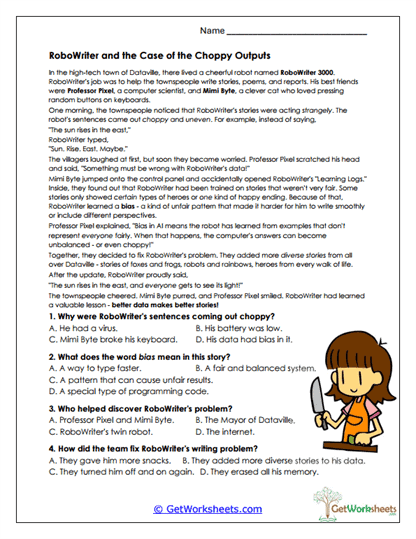
Role of Bias in AI
Learners analyze how bias enters AI systems and why fairness matters. This builds ethical reasoning and awareness of diverse perspectives. Recognizing bias encourages thoughtful use of digital tools.
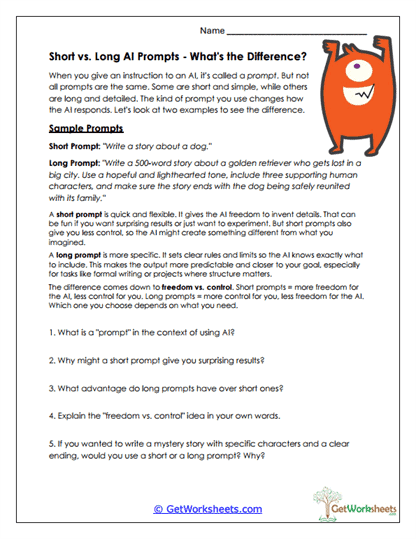
Short Prompt vs. Long Prompt
These worksheets compare how prompt length affects AI understanding. This teaches students to balance detail with simplicity. Applying this skill helps communicate clearly in many contexts.
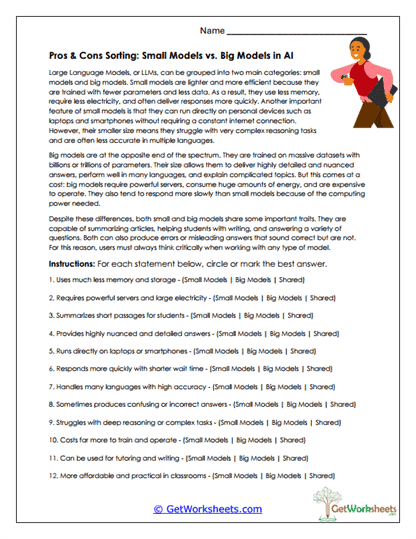
Small vs. Big AI Models
Students study the differences between compact models and large, complex ones. This strengthens their understanding of scale and capability. Knowing model types helps learners choose the right tool for their needs.
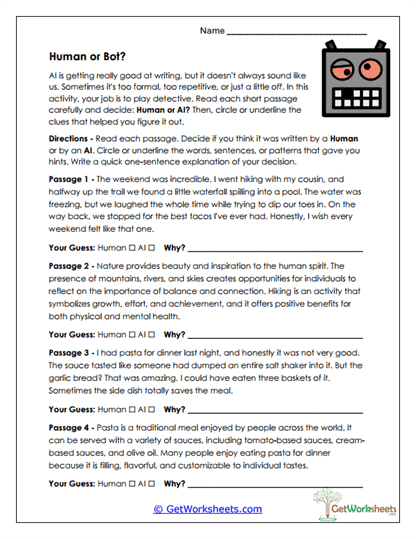
Spotting AI
Learners practice identifying AI-generated content in images, writing, or dialogue. This builds analytical reading and observation skills. Being able to recognize AI output supports responsible media use.
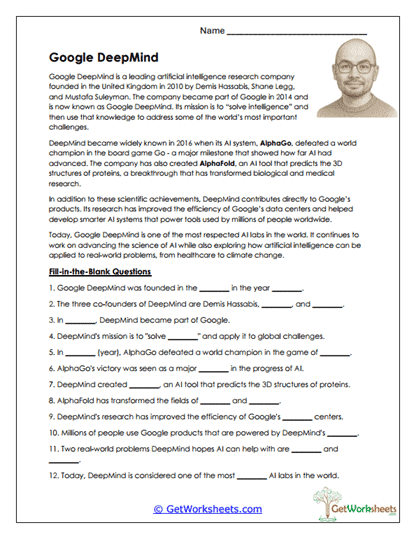
The AI Industry
These worksheets introduce major companies, roles, and innovations shaping the AI landscape. This enhances career awareness and industry knowledge. Understanding this landscape helps learners imagine future opportunities.
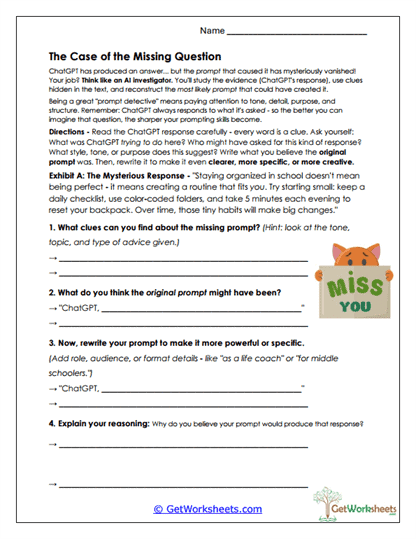
Understanding AI Prompt Outputs
Students examine why AI responds the way it does and how outputs relate to prompts. This builds cause-and-effect reasoning. Interpreting outputs helps learners refine tasks more effectively.
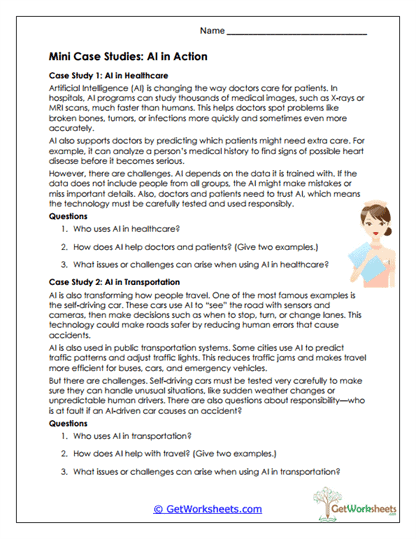
What is Artificial Intelligence?
These worksheets introduce learners to AI in simple, approachable terms that make the concept easy to understand. This grounding helps students feel more confident as they explore more complex ideas later on. Having a clear starting point makes every other AI topic feel less intimidating and more connected.
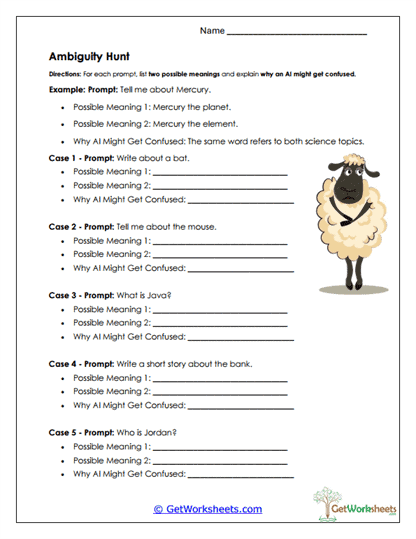
Why Do AI Models Make Mistakes?
Learners explore why errors happen in AI systems and what limitations they have. This builds critical evaluation skills and realistic expectations. Understanding mistakes helps learners use AI with more confidence and care.
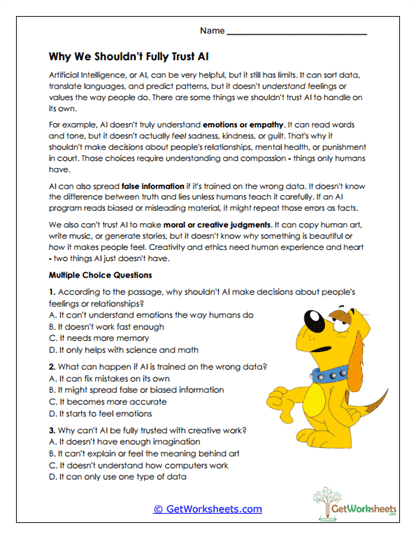
Would You Trust AI?
Students reflect on scenarios involving trust, accuracy, and responsibility in technology use. This promotes thoughtful discussion and personal reasoning. Considering trust helps learners make balanced decisions.
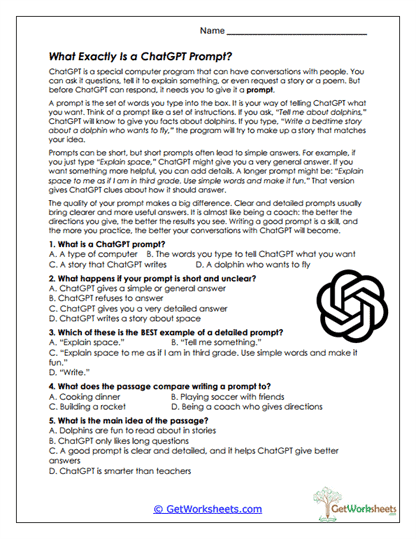
Writing a Good AI Prompt
These worksheets teach structure, detail, and clarity for crafting effective prompts. This supports strong communication and writing skills. Clear prompting benefits students in academic tasks and digital interactions alike.
Bookmark Us Now!
New, high-quality worksheets are added every week! Do not miss out!