Abuse of Language, Abuse of Power Worksheets
About This Worksheet Collection
The Abuse of Language, Abuse of Power Philosophy Study collection challenges students to think critically about how words shape truth, ethics, and social influence. Through a mix of analysis, writing, and reflection, these worksheets guide learners in unpacking Josef Pieper's warning about the dangers of rhetorical manipulation. Students engage deeply with the intersections of language, morality, and communication while exploring how integrity in speech preserves human dignity.
This collection encourages learners to read analytically, reason ethically, and communicate responsibly. By examining propaganda, euphemisms, and the misuse of persuasion, students develop awareness of the moral responsibilities tied to both speech and listening. Each activity blends philosophical inquiry with practical application, empowering students to recognize and resist manipulation in modern discourse while fostering respect for truth and authentic dialogue.
Detailed Descriptions Of These Worksheets
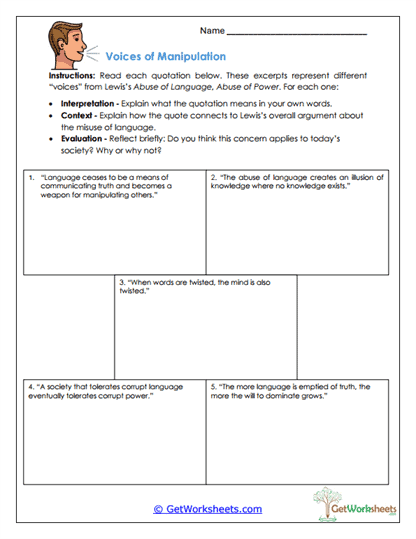
Voices of Manipulation
Students analyze quotations to uncover how language can distort truth and influence thought. Each excerpt requires learners to interpret meaning, evaluate ethical implications, and connect Pieper's insights to contemporary examples. The exercise builds comprehension, critical reasoning, and moral reflection through direct engagement with philosophical text. It promotes awareness of rhetoric's power in shaping modern communication and ethics.
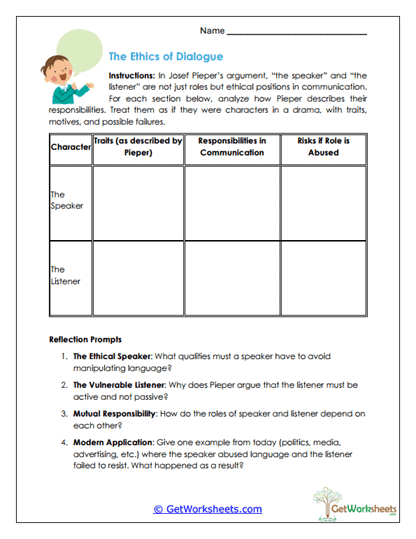
The Ethics of Dialogue
This worksheet compares the speaker's and listener's moral roles in ethical communication. Learners fill out a chart analyzing responsibilities, risks, and attitudes within conversation. Reflection questions prompt insight into mutual accountability, respect, and truth-seeking. The activity strengthens reasoning skills and underscores how communication ethics safeguard authentic dialogue and civic harmony.
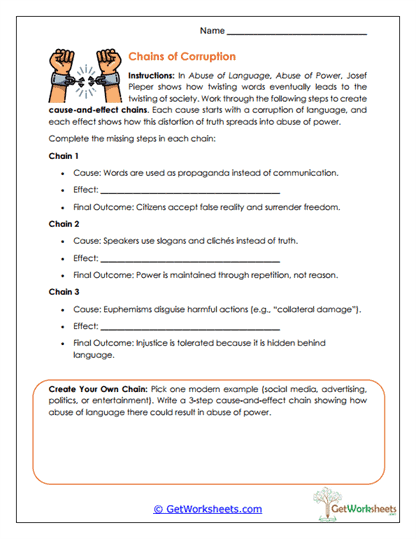
Chains of Corruption
Students explore cause-and-effect connections between the misuse of language and the breakdown of moral integrity. They complete missing links in logical chains illustrating how distortion leads to corruption in culture and society. An optional creative task invites them to design their own modern example. This analytical framework sharpens reasoning and deepens understanding of Pieper's moral argument.
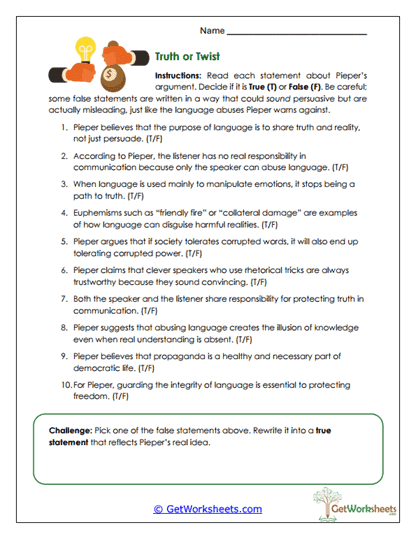
Truth or Twist
Learners decide whether statements accurately reflect Pieper's ideas or illustrate manipulation of truth. The true-or-false format encourages close reading and discernment. A concluding activity challenges students to rewrite false statements as truthful ones, reinforcing integrity in communication. This critical exercise strengthens reasoning and cultivates vigilance against rhetorical deception.
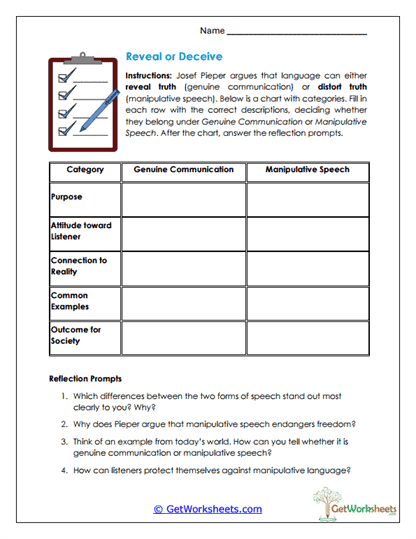
Reveal or Deceive
In this categorization task, students distinguish between genuine and manipulative communication. They sort examples based on purpose, truthfulness, and social effect, followed by reflection questions. The worksheet develops evaluative judgment and moral literacy, helping learners identify honesty versus distortion in real-life contexts. It encourages ethical awareness and respect for the listener's dignity.
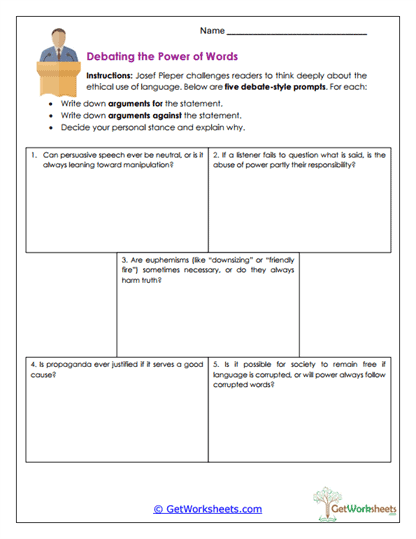
Debating the Power of Words
Students engage in structured ethical debates about persuasion, propaganda, and truth. Each prompt requires arguments for and against a claim, followed by a personal stance with justification. This exercise sharpens analytical writing, respectful discourse, and evidence-based reasoning. Learners develop confidence in evaluating complex issues surrounding communication and morality.
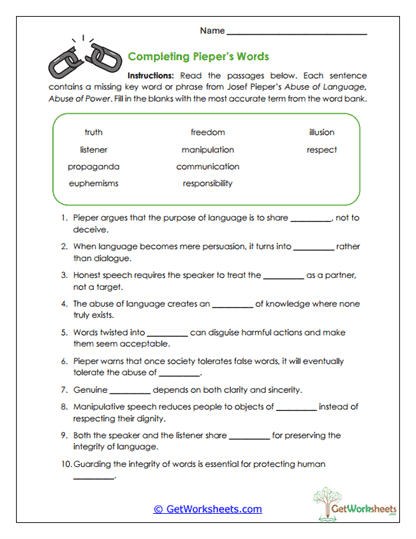
Completing Pieper's Words
This vocabulary-focused worksheet reinforces comprehension of key philosophical terms such as propaganda, truth, and moral responsibility. Students complete sentences using context clues, ensuring conceptual understanding. It builds academic vocabulary while deepening reflection on the moral weight of precise word choice. The activity strengthens reading comprehension and ethical language use.
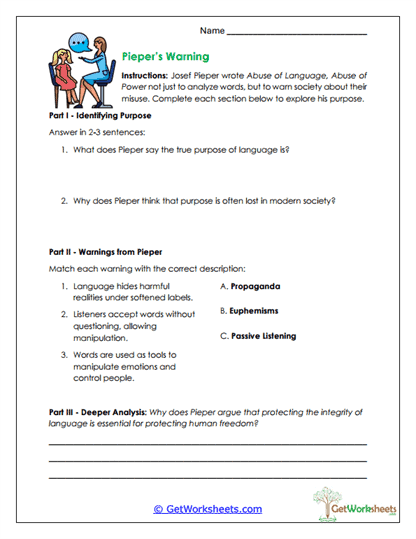
Pieper's Warning
Learners examine Pieper's warnings about the misuse of language through matching and written response tasks. They define key ideas, explain their meaning, and compose an analytical paragraph linking language integrity to freedom. The exercise integrates comprehension, analysis, and reflective writing. It encourages students to see ethical speech as essential to justice and democracy.
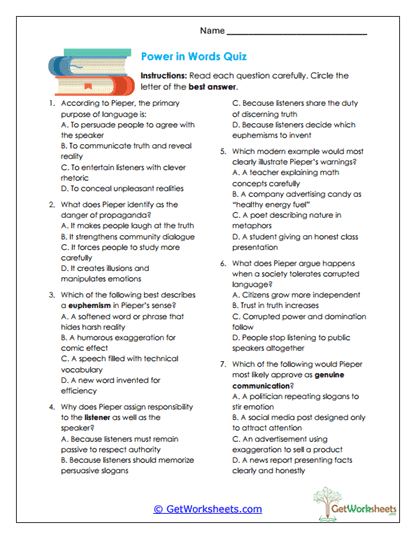
Power in Words Quiz
This multiple-choice quiz evaluates students' grasp of Pieper's arguments, testing recall, interpretation, and application. Each question emphasizes reasoning about ethical communication and propaganda. The assessment serves as a review tool to reinforce understanding of truth, manipulation, and moral accountability. It encourages mastery of both conceptual and applied philosophy.
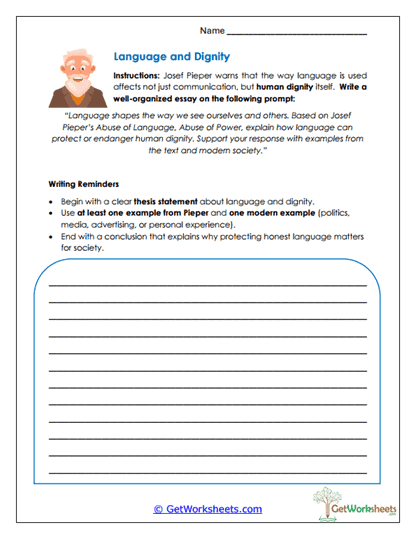
Language and Dignity
Students compose an essay connecting Pieper's philosophy to real-world communication ethics. They form a thesis, support it with textual evidence, and include a modern example from media or politics. The task develops composition skills, ethical analysis, and synthesis of ideas. By writing persuasively, learners articulate how truthful speech upholds human dignity.
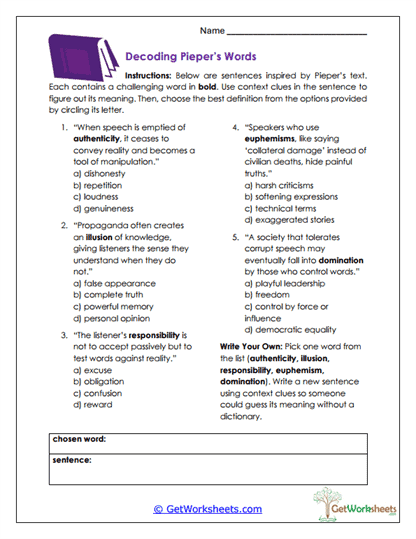
Decoding Pieper's Words
Through context-based multiple-choice questions, students infer meanings of moral and philosophical vocabulary. A follow-up writing task challenges them to apply a new word in an original sentence. This exercise strengthens inferential comprehension, precision in expression, and contextual understanding. It also reinforces Pieper's belief in clarity as a defense against manipulation.
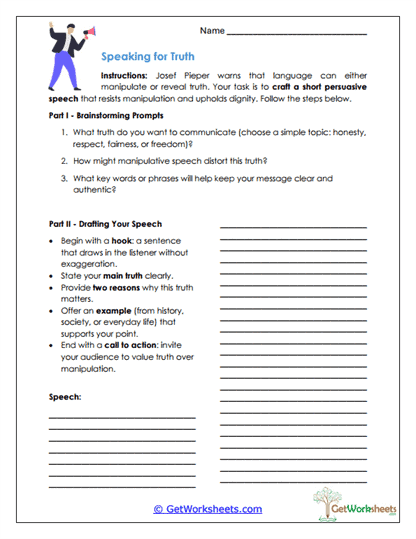
Speaking for Truth
In this final activity, students write a persuasive speech advocating honesty and integrity in communication. Guided prompts help them plan structure, evidence, and tone while crafting a compelling message. The task merges rhetorical skill with ethical reflection, encouraging responsible self-expression. Students learn to use language as a force for truth, not power, while building confidence in public speaking and persuasive writing.
Bookmark Us Now!
New, high-quality worksheets are added every week! Do not miss out!