A Midsummer Night's Dream Worksheets
About This Worksheet Collection
The A Midsummer Night's Dream Literature Study collection brings Shakespeare's whimsical world of fairies, mistaken identities, and tangled love stories to life through analytical and creative exercises. Each worksheet engages learners in exploring the play's rich language, dramatic irony, and timeless themes of love, illusion, and transformation. Students strengthen comprehension through matching, sequencing, and comparison tasks while also expressing creativity in rewriting, comic design, and essay composition.
This collection blends traditional literary study with imaginative interpretation. Learners practice close reading, text analysis, and contextual understanding while reimagining scenes for modern audiences. By connecting classical literature to humor, emotion, and human folly, these worksheets make Shakespeare's magic accessible and relevant to students of all levels.
Detailed Descriptions Of These Worksheets
Character Match-Up
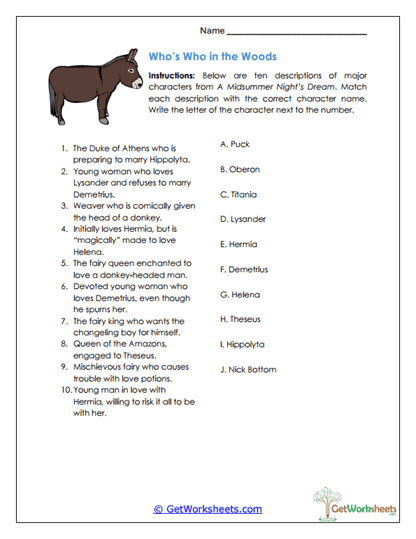
Students match ten character descriptions with the correct names, identifying figures such as Puck, Hermia, Titania, and Oberon. Each clue explores relationships, motivations, or roles that drive the plot's conflict and resolution. The activity strengthens comprehension and recall while helping students recognize Shakespeare's use of archetypes and contrasts. It also enhances understanding of how character interactions shape the play's humor and emotional balance.
Quoting the Fairies
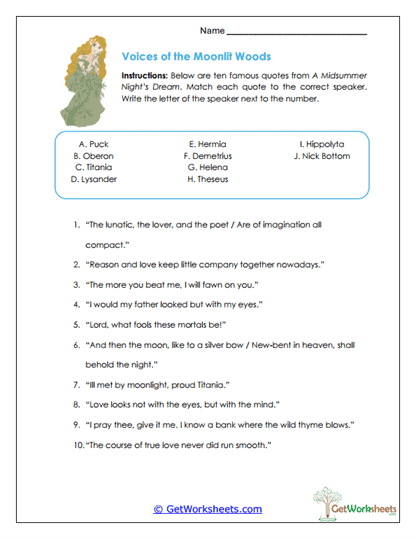
This worksheet invites students to identify the speakers of famous quotes from the play. Learners analyze tone and language to connect memorable lines to their characters, exploring how Shakespeare crafts personality through dialogue. The exercise promotes close reading and textual interpretation while developing an appreciation for poetic devices. Students gain insight into how wit and wordplay reveal character intent and theme.
Event Sequencing
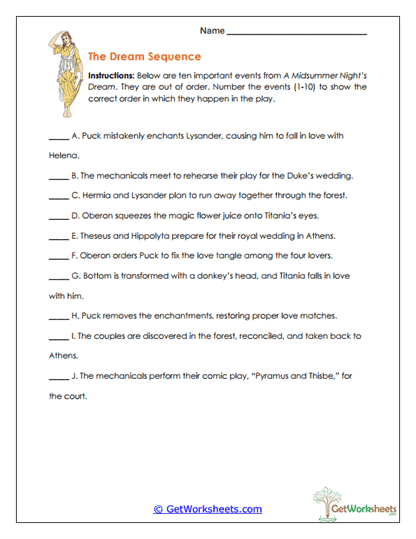
Students arrange ten major events from A Midsummer Night's Dream in chronological order. The sequencing task reinforces story structure, cause-and-effect logic, and comprehension of the play's multiple plotlines. It helps learners visualize the progression from conflict to resolution while highlighting Shakespeare's intricate pacing. By reviewing the plot's shifting emotions, students strengthen both memory and analysis.
Cause and Effect Chains
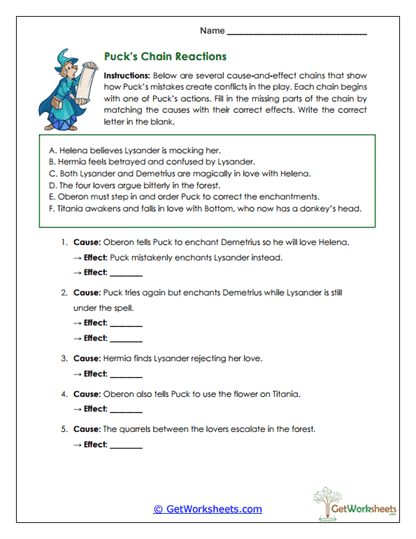
Learners explore Puck's mischievous actions and their ripple effects throughout the play. Each cause, such as a misplaced enchantment, must be matched to its resulting chaos or misunderstanding. The activity develops critical reasoning by showing how small magical errors lead to large-scale comedic consequences. It builds comprehension of plot logic and deepens appreciation for Shakespeare's structural humor.
Character Comparison
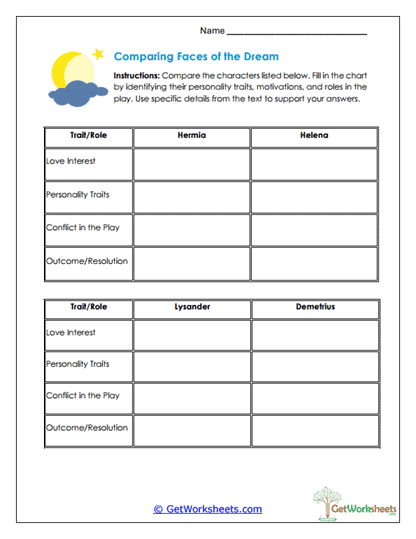
This comparative chart allows students to analyze the similarities and differences between Hermia, Helena, Lysander, and Demetrius. They identify conflicts, personality traits, and emotional arcs, using textual evidence for support. The activity encourages analytical thinking about how love and jealousy shape behavior. By organizing information visually, learners clarify relationships and gain insight into the play's commentary on affection and identity.
Comic Scene Creation
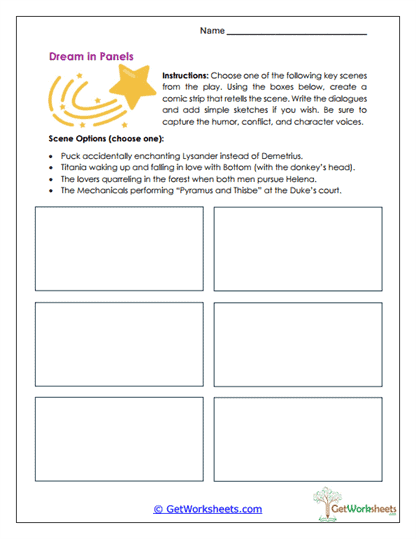
Students retell one of Shakespeare's scenes as a comic strip, scripting dialogue and drawing simple panels. They may choose comedic moments such as Puck's confusion or the play-within-a-play scene. This creative retelling strengthens understanding of tone, pacing, and visual storytelling. It helps learners express humor and interpretation while reinforcing comprehension through artistic design.
Fact or Fiction
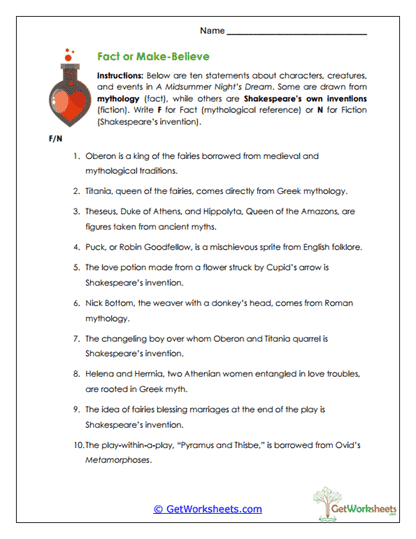
Students determine whether references in A Midsummer Night's Dream originate from mythology or Shakespeare's imagination. By distinguishing historical myth from literary invention, they explore how Renaissance writers blended classical lore with creative adaptation. The worksheet enhances cultural literacy and critical evaluation skills. It also deepens understanding of how Shakespeare drew from myth to construct his enchanted world.
Multiple Choice Review
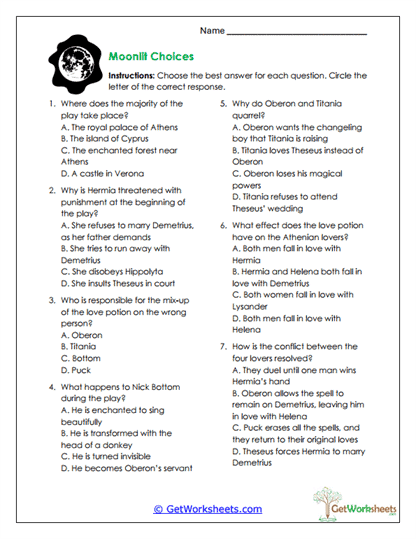
This quiz-style worksheet reviews plot, setting, and character dynamics through carefully designed questions. Students recall key details such as magical misunderstandings, forest encounters, and reconciliations. The task supports comprehension and preparation for discussion or exams while reinforcing attention to textual evidence. It offers a structured yet engaging way to assess learning progress.
True or False Review
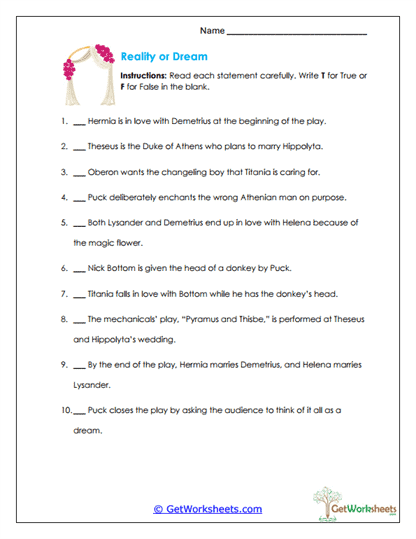
Learners read statements about the play's events and determine their accuracy. The quick-response format encourages focused recall and strengthens comprehension of cause, effect, and resolution. It is ideal for review or formative assessment. Students build attention to detail while reinforcing understanding of character relationships and thematic closure.
Comparative Essay Writing
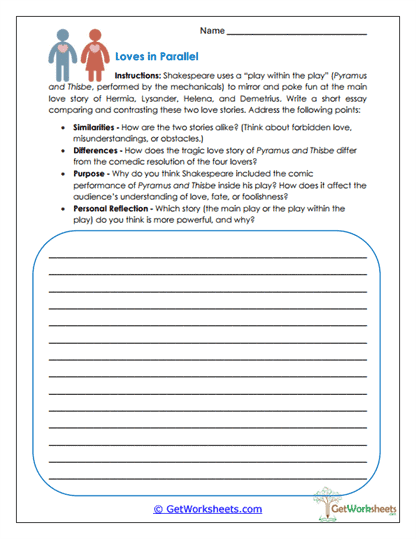
Students write a short essay comparing Pyramus and Thisbe-the play within the play-to the lovers' storyline. They analyze shared themes of love, miscommunication, and tragedy, while reflecting on Shakespeare's use of parody. Prompts guide essay structure and encourage critical reflection on storytelling and irony. This assignment develops formal writing and literary comparison skills.
Modern Rewrite
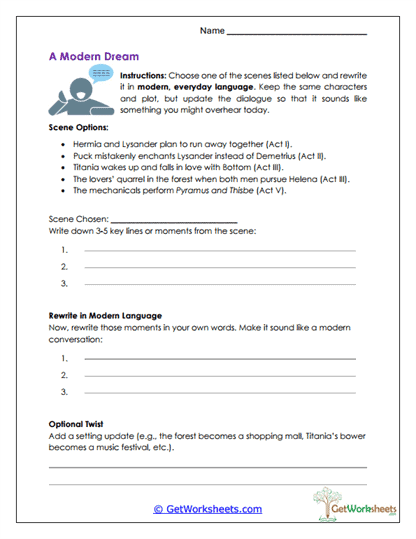
In this creative adaptation, learners translate Shakespearean dialogue into modern English. They can also update the setting-for example, imagining the enchanted forest as a city park or summer festival. The activity promotes comprehension of Elizabethan language while encouraging playful reinterpretation. Students learn how timeless emotions and conflicts can transcend centuries and cultural shifts.
Cause and Effect Web (Ripples of Mischief)
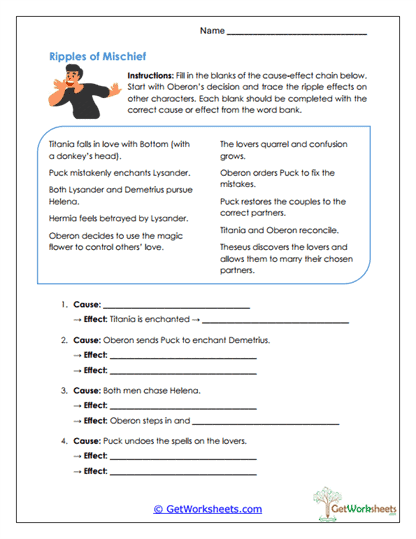
Students trace the chain of magical cause and effect that shapes the play's central conflicts. Using a diagram, they identify how Oberon's decision to use magic sets off confusion and ultimately harmony. The visual format promotes logical reasoning and comprehension of interwoven storylines. Learners grasp how comedy arises from misunderstanding and resolution through balance and forgiveness.
Bookmark Us Now!
New, high-quality worksheets are added every week! Do not miss out!