A Good Man is Hard to Find Worksheets
About This Worksheet Collection
The A Good Man Is Hard to Find Literature Study collection helps students explore Flannery O'Connor's powerful blend of Southern Gothic storytelling, moral irony, and religious symbolism. Each worksheet challenges readers to engage critically with the text, uncovering deeper meanings behind O'Connor's language, structure, and characters. Through writing, analysis, and creative expression, students examine key themes such as grace, hypocrisy, violence, and redemption.
This collection offers a balance of literary analysis and personal reflection. Learners develop interpretive skills by examining quotes, symbols, and narrative techniques while also applying ethical reasoning and empathy to O'Connor's complex moral world. The worksheets encourage critical thought, textual evidence, and creative exploration-all essential tools for understanding this unsettling yet transformative story.
Detailed Descriptions Of These Worksheets
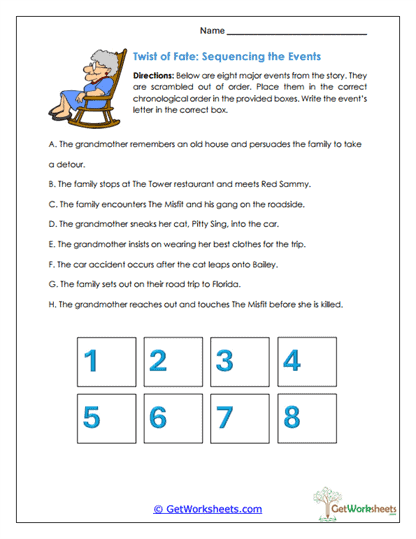
Event Sequencing
Students arrange eight major events from A Good Man Is Hard to Find in proper chronological order, reinforcing their comprehension of plot structure and cause-and-effect relationships. Each event builds toward the story's haunting conclusion, helping learners understand how foreshadowing contributes to tone and theme. The task also highlights O'Connor's deliberate pacing and narrative irony, strengthening students' ability to analyze how structure shapes meaning.
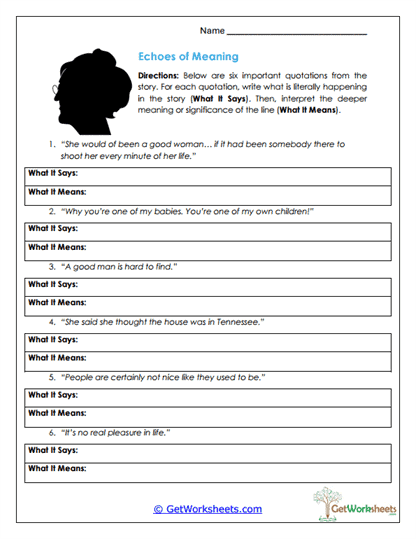
Quote Interpretation
This worksheet asks students to analyze six key quotes, unpacking their literal and figurative meanings. Learners explore themes of morality, grace, and human frailty through close reading and inference. By reflecting on tone and irony, students uncover how O'Connor weaves faith and tragedy into her dialogue. The exercise builds confidence in literary interpretation and text-based reasoning.
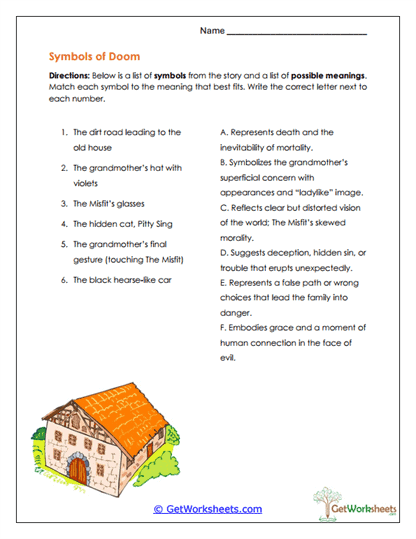
Symbol Analysis
Students match symbols such as the grandmother's hat, the Misfit's glasses, and the family's car to their deeper meanings. The activity helps learners connect imagery to moral conflict and death symbolism, promoting metaphorical thinking. It also demonstrates how O'Connor uses recurring objects to comment on pride, fate, and spiritual blindness. This analysis enhances students' ability to interpret figurative meaning in literary texts.
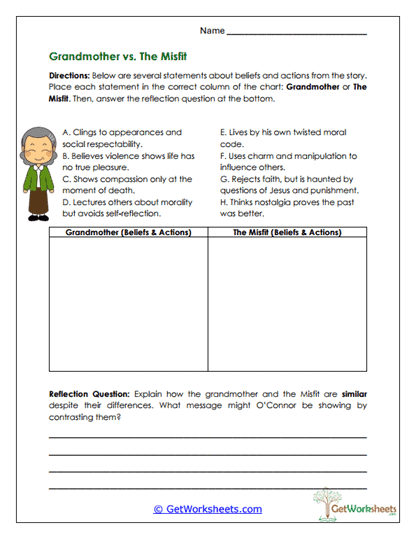
Character Comparison
Learners compare the grandmother and the Misfit by examining moral beliefs, attitudes, and actions. The worksheet concludes with a short written response analyzing grace, sin, and hypocrisy in their interactions. Through this contrast, students explore the story's complex moral center and O'Connor's depiction of flawed humanity. It builds critical thinking and deeper comprehension of character motivation.
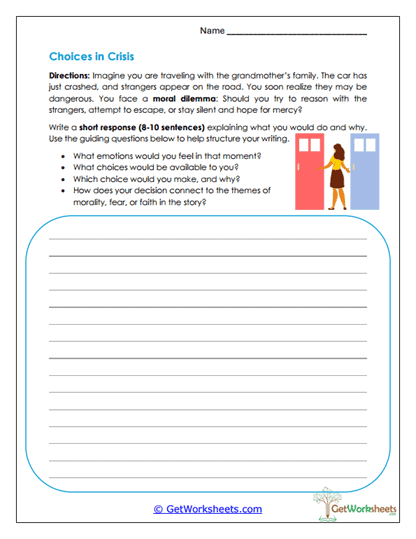
Moral Dilemma Response
Students place themselves in the grandmother's family during the story's tense climax and write a personal response. They describe emotions, moral choices, and reactions to danger in a reflective 8-10 sentence paragraph. This activity connects personal ethics with literary analysis, promoting empathy and introspection. It helps students see the story as both a moral allegory and a psychological study.
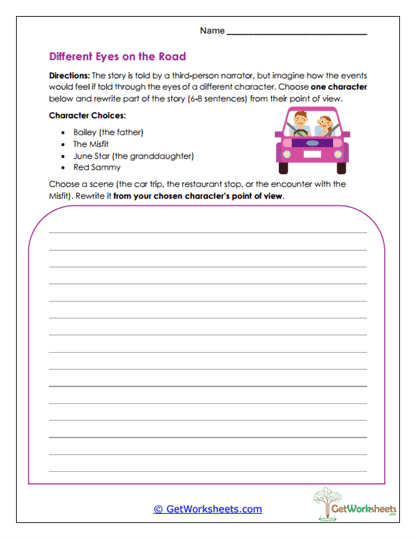
Point of View Rewrite
In this narrative exercise, students retell a key scene from a different character's perspective. Whether rewriting as Bailey, the Misfit, or June Star, learners practice understanding tone, bias, and emotion through altered narration. This creative activity builds awareness of point of view as a literary device and deepens engagement with character psychology.
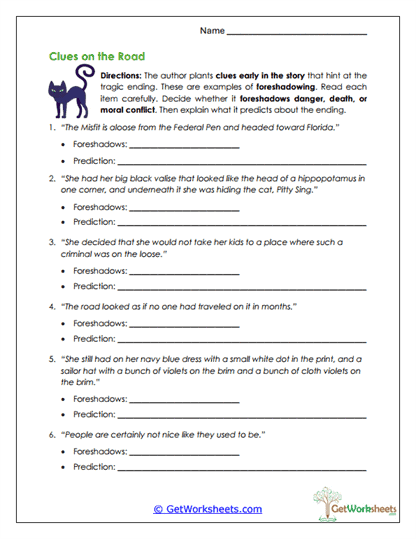
Foreshadowing Clues
Students identify instances of foreshadowing that hint at the story's dark conclusion. By analyzing details and predictions, they explore how O'Connor uses subtle cues to create tension and irony. The worksheet encourages close reading, inferential thinking, and discussion about how fate is constructed through small narrative details.
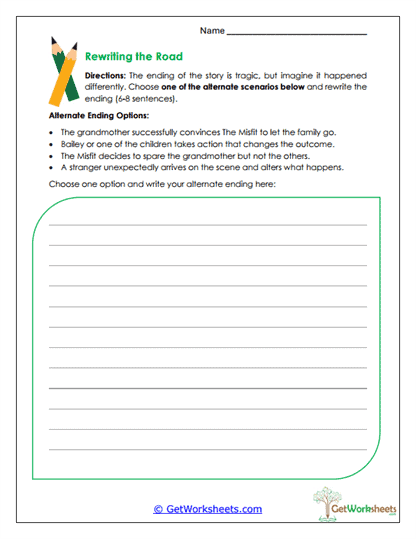
Alternate Ending
This creative assignment invites students to imagine how the story might change if events took a different turn. Learners write an alternate conclusion where characters make different choices, exploring how morality and grace might shift in outcome. The exercise encourages imaginative thinking and awareness of how tone and theme depend on resolution. It also provides insight into O'Connor's deliberate control of her story's moral impact.
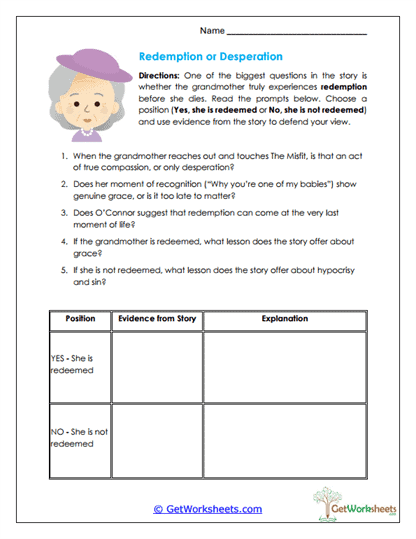
Redemption Debate
Students argue whether the grandmother achieves redemption before her death, supporting their view with evidence. The debate format fosters analytical reasoning and close textual study. Learners consider O'Connor's religious themes and ambiguous portrayal of grace. This task challenges them to form persuasive, evidence-based arguments rooted in interpretation.
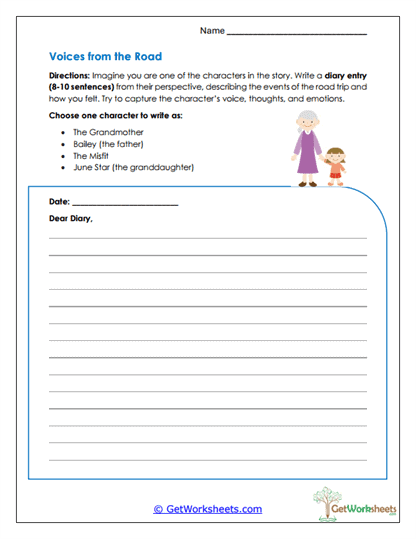
Character Diary
Students write a diary entry from the point of view of one of the main characters, expressing inner conflict and reflection. The exercise encourages empathy and emotional interpretation of character motivation. It bridges creative writing with literary analysis, helping students imagine the moral and psychological realities of O'Connor's characters.
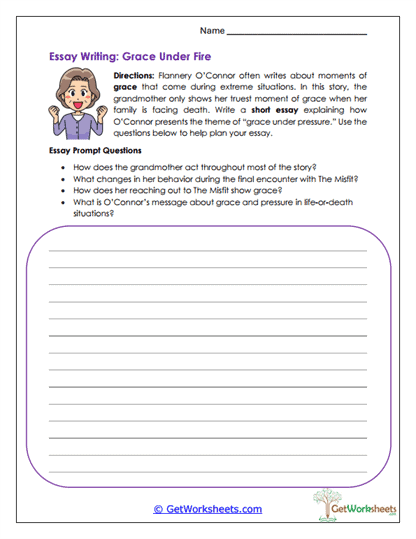
Grace Under Fire
In this analytical essay, students explore how O'Connor presents grace through violence and revelation. They reflect on the grandmother's final act of compassion and discuss the meaning of spiritual awakening under pressure. The activity guides students through moral and philosophical interpretation while developing essay organization and critical insight.
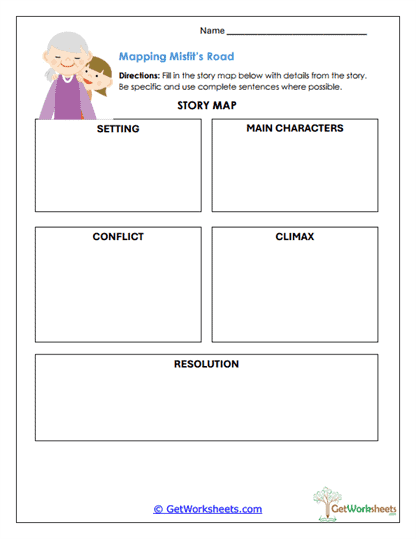
Story Mapping
Learners chart the story's structure using a detailed organizer, identifying setting, characters, conflict, climax, and resolution. This visual activity helps clarify narrative flow and highlights how tension builds toward moral revelation. It reinforces comprehension, organization, and literary analysis skills, showing how every structural choice contributes to theme.
Bookmark Us Now!
New, high-quality worksheets are added every week! Do not miss out!