A Christmas Carol Worksheets
About This Worksheet Collection
The A Christmas Carol Literature Study collection guides students through Charles Dickens's timeless story of redemption, generosity, and social awareness. Each worksheet combines close reading, literary analysis, and creative engagement to help learners explore the transformation of Ebenezer Scrooge and the moral lessons woven throughout the novella. Through activities in sequencing, symbolism, character study, and writing, students deepen comprehension while strengthening empathy and critical reflection.
This collection balances analytical rigor with creative expression. Learners practice interpreting figurative language, analyzing moral growth, and articulating ideas in both discussion and writing. By connecting Scrooge's personal awakening to broader human values, these activities encourage students to see A Christmas Carol not just as a holiday tale, but as a lasting reflection on kindness, perspective, and change.
Detailed Descriptions Of These Worksheets
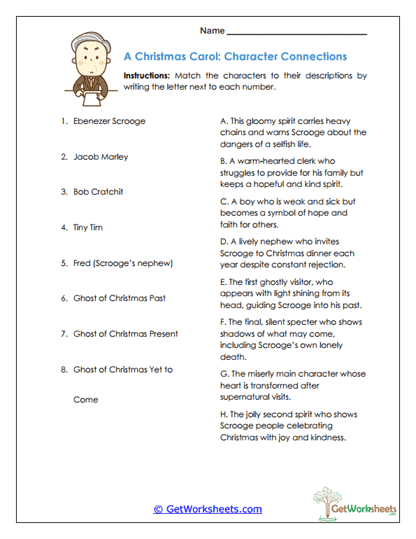
Character Connections
Students match characters such as Scrooge, Marley, and the Ghosts of Christmas to their defining descriptions. The task reinforces reading comprehension and literary recall while promoting an understanding of character roles and motivations. Learners analyze how each figure contributes to Dickens's exploration of redemption and morality.
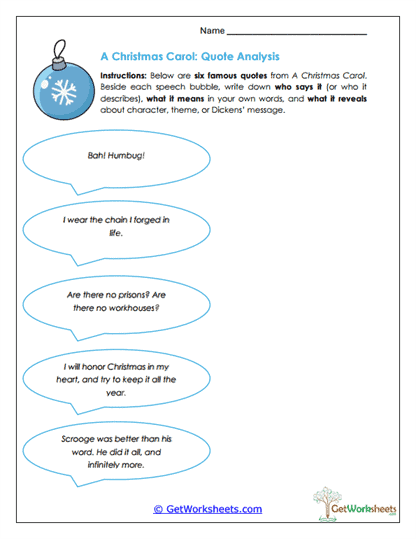
Quote Analysis
This worksheet asks students to interpret six pivotal quotes from A Christmas Carol and explain their meaning in context. Learners connect each line to central themes such as compassion, greed, and transformation. Through reflective writing, students strengthen inferential thinking and appreciate Dickens's ability to convey social messages through dialogue and tone.
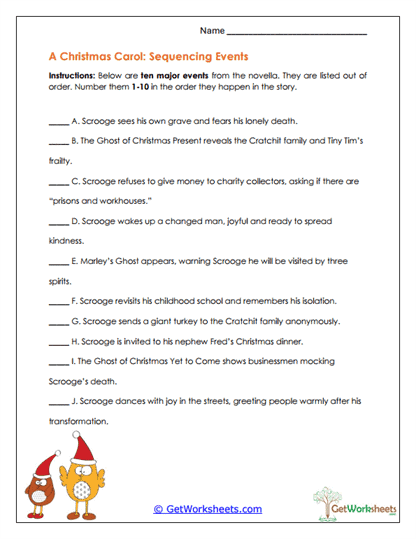
Sequencing Events
Learners place ten major plot points in correct chronological order, tracing Scrooge's evolution throughout the story. The task builds comprehension of cause and effect and reinforces awareness of narrative structure. It also encourages students to recognize how Dickens crafts pacing and emotional impact through event progression.
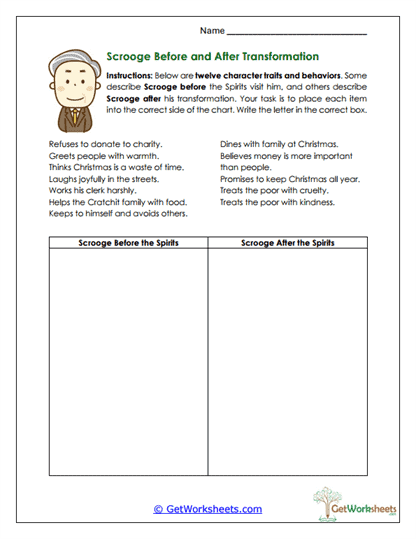
Before and After Transformation
Students categorize traits that describe Scrooge before and after his encounters with the Spirits. The exercise develops analytical and reflective thinking as learners examine moral development and personal growth. By comparing two contrasting portraits, they gain deeper insight into character motivation and Dickens's message of change.
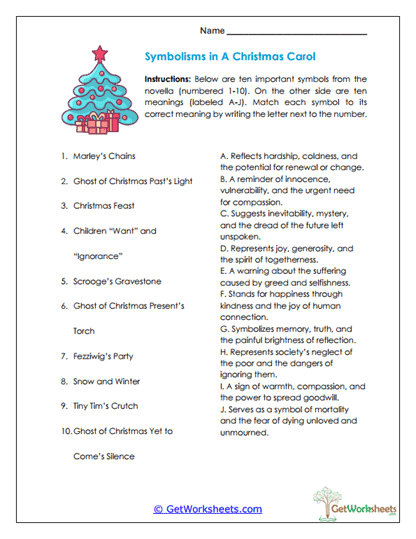
Symbolism Study
Learners explore ten key symbols from the story-such as Marley's chains and Tiny Tim's crutch-and explain their deeper meanings. This worksheet promotes literary analysis by linking imagery to abstract ideas like hope and responsibility. It encourages critical thinking about how symbolism reinforces Dickens's moral and social themes.
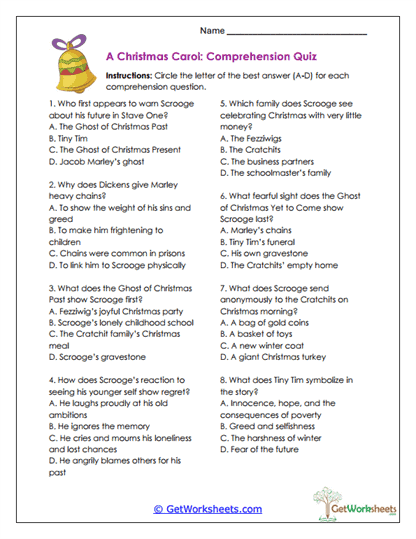
Comprehension Quiz
This quiz assesses students' understanding of plot, characters, and central themes through multiple-choice questions. It supports recall and reading accuracy while reinforcing comprehension of Dickens's moral messages. Teachers can use it for review, discussion, or summative evaluation.
Figurative Hunt
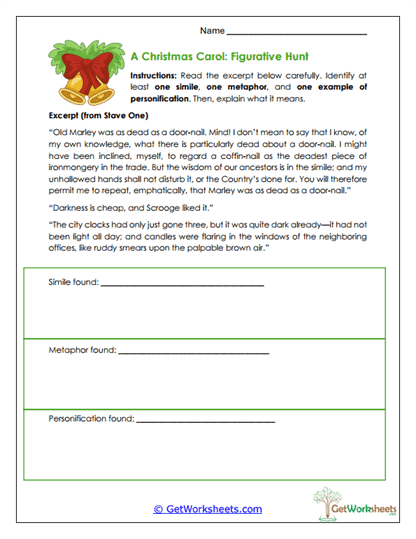
Students analyze an excerpt to identify similes, metaphors, and personification. The activity highlights Dickens's use of figurative language to create tone and mood. Learners explain each device's effect, developing appreciation for author's craft and literary style.
Dialogue Fill-Ins
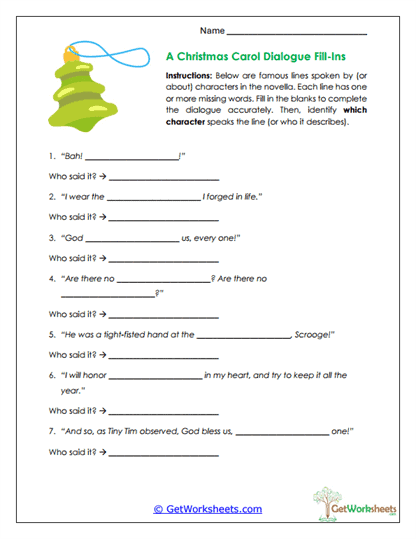
Learners complete famous lines from the novella and identify which character said each one. The task supports memory, fluency, and understanding of voice and characterization. It helps students appreciate how dialogue reveals emotion and advances theme.
Diary Entry Writing
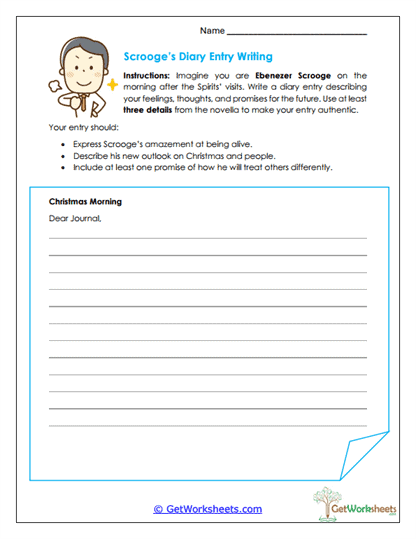
Students step into Scrooge's perspective to write a diary entry after his spiritual awakening. They express emotions, gratitude, and newfound insight, using evidence from the text. This creative task builds empathy, expressive writing skills, and understanding of transformation as a narrative theme.
Letter to Scrooge
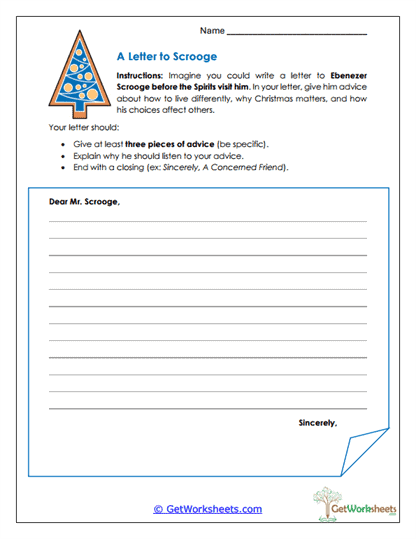
Learners compose a persuasive letter offering Scrooge advice on generosity and kindness before his ghostly visits. The activity develops moral reasoning, persuasive technique, and text-to-self connection. It also reinforces the novella's enduring message about compassion and change.
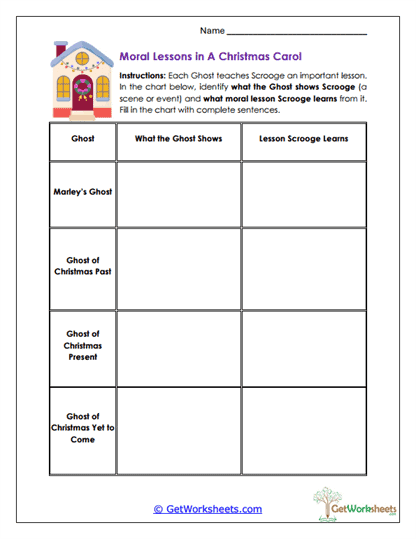
Moral Lessons
Students identify the lesson taught by each of the four spirits and explain how Scrooge benefits from it. The chart-based activity supports summarization, theme recognition, and reflection on personal growth. It connects the story's supernatural elements to its moral foundations.
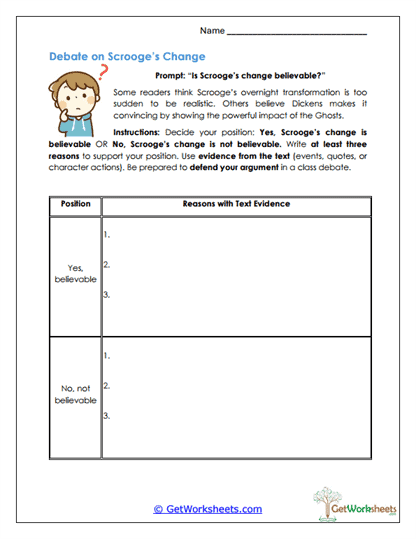
Debate on Change
Learners take a stance on whether Scrooge's transformation is believable and support their view with textual evidence. This argumentative exercise strengthens reasoning, literary interpretation, and debate skills. It encourages thoughtful discussion about authenticity, redemption, and human potential for change.
Bookmark Us Now!
New, high-quality worksheets are added every week! Do not miss out!